How to Prepare Questions for a Doctor Visit as a Family Caregiver

Last updated: November 19, 2026
Key Takeaways
- Build a one-visit list around one main problem and one clear goal.
- Ask what the symptom pattern means, what is urgent, and what should change next.
- Ask which medicines may be causing the problem, what not to stop suddenly, and the current dose schedule.
- Leave with the next step, the deadline, and the contact person written down.
A family caregiver gets one shot at a short appointment, so the questions have to do real work. Start with the top 3 concerns, the medicines the person is taking, and any symptom changes from the last 7 to 14 days; otherwise, the visit can drift and the useful part gets squeezed out.
Build a doctor visit question list before the appointment
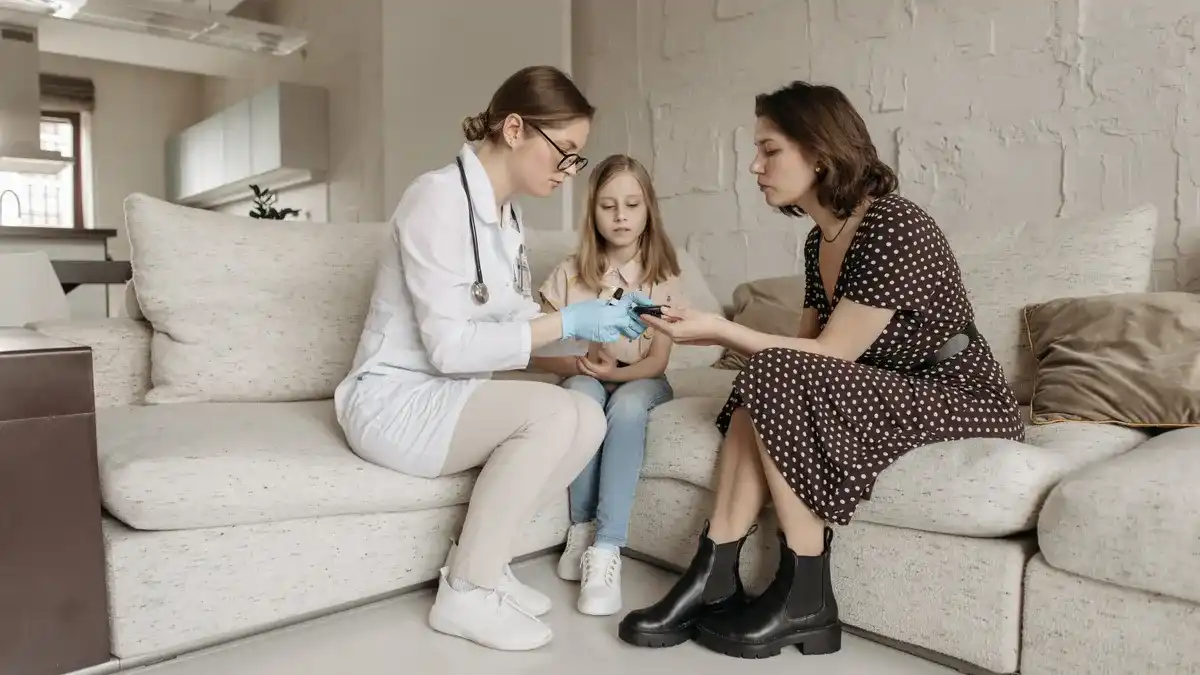
One visit, one main problem, one clear goal — that is the cleanest setup I know. A doctor visit question list works best when I keep it that tight, because the doctor should review any concerns that need medical judgment. Mayo Clinic
Start with the basics on a single page or note app:
- Write the visit goal at the top. Example: “Find out why the cough is worse” or “Review confusion after the new blood pressure medicine.” In practice, that lets me say the purpose in one sentence.
- List the top 3 concerns in order. Put the most urgent item first. Many office visits run 15 to 20 minutes, and the main issue can vanish fast if I bury it.
- Add the current medication list. Include prescription drugs, over-the-counter pain relievers, vitamins, inhalers, eye drops, and supplements. A complete list makes it easier to ask about side effects and interactions, and a pharmacist or clinician can help review it. NIA, FDA
- Write the symptom changes with dates or timeframes. For example, “more short of breath for 5 days” or “missed 2 doses this week because of nausea.” Timing sharpens the picture, and a clinician should help interpret the pattern. MedlinePlus
- Leave space for answers and next steps. One or two blank lines under each question is enough; when the page fills up, the list has done its job.
For one practical framework on organizing family communication around care, the hub on caregiver coordination and communication is the right place to go after this page.
The most common mistake is a giant wish list. A 12-question page can feel thorough, but it often hides the one question that changes treatment; honestly, a shorter list is easier to use with a professional. Shorter usually wins when the visit is brief, the patient is tired, or a specialist is moving quickly.
What should I ask about symptom changes?
Ask what the symptom pattern means, what would make it urgent, and what should change before the next visit. Those three questions turn vague complaints into a plan the doctor can act on, and a clinician can help judge whether the pattern needs urgent care. MedlinePlus, Mayo Clinic
Use symptom questions that match what changed in the last few days or weeks:
- What do you think is causing this symptom change?
- What warning signs mean I should call today instead of waiting?
- What should I watch for over the next 48 hours, 7 days, or 2 weeks?
- Is this symptom likely from the condition itself or from a medicine?
- What changes in breathing, pain, confusion, appetite, sleep, or walking matter most here?
Be specific. “Worse” is weak compared with “short of breath after walking from the bedroom to the kitchen” or “more confused after 7 p.m. for the past 4 nights.” Doctors use patterns, triggers, and timeframes to sort out whether this is a side effect, a flare, or something unrelated, and a professional should help interpret the pattern.
One symptom at a time works best, if possible. Bring up pain, dizziness, and swelling all at once, and the appointment can turn into a general review with no clear direction. A single symptom with a timeline usually gets a more useful answer.
This is also the place to ask what counts as an emergency. If the doctor says “call if X happens,” write down the exact threshold, not just the general idea. “If the oxygen stays below 90%” means something different from “if breathing looks worse.” If the office uses a patient portal, ask whether symptom updates belong there or by phone.
How do I ask about medications without missing side effects?

Ask which medicines could be causing the new problem, which ones should not be stopped suddenly, and what the dosing schedule should be from now on. That is a careful way to talk about medications during a family caregiver visit, and a pharmacist or doctor should confirm the plan. NIA, FDA
Bring the medication list in the most usable form:
- name of each medicine
- dose, such as 5 mg or 10 mL
- how often it is taken
- the reason it was prescribed
- what time it is actually taken
- any recent misses, double doses, or stopped medicines
Then ask questions that make the plan concrete:
- Which medicines could explain the symptom changes?
- Is there a safer time of day to take this medicine?
- What side effects should I expect in the first 1 to 2 weeks?
- Which medicines should never be stopped without calling first?
- Do any medicines need a different dose because of age, kidney problems, or liver problems?
- Can any of these be taken together, or should some be separated by a few hours?
“Are the medicines okay?” is too broad. A focused question such as “Could the new dizziness come from the blood pressure pill or the sleep medicine?” is more useful, because it gives the doctor something to sort through.
Time is the trade-off. A full medication review can swallow much of a short appointment, especially if the person sees both a primary care doctor and a specialist. So I would ask about the medicines tied to the current concern first, then make a second list for less urgent questions. If the doctor wants a separate medication reconciliation, accept that and keep this visit centered on the main issue.
What follow-up instructions do I need before I leave?
Leave with 3 things written down: the next step, the deadline, and who to call if the plan does not work. Without those, the visit ends with good intentions and no action.
The follow-up questions that matter most are these:
- What happens next, and by when?
- Is this a same-day change, a 2-week watch-and-wait plan, or a referral to a specialist?
- If a test is ordered, when should results come back?
- Who will contact me about the results: the office, the portal, or the lab?
- What do I do if symptoms worsen before the next appointment?
- When should I schedule the follow-up visit?
If a test is involved, ask exactly what the result could change. A blood test, X-ray, urine test, or imaging study only matters if I know what decision follows. “We’ll see what it shows” is not enough for a caregiver trying to manage the week ahead.
Specialist visits need attention too. If the person is already seeing a cardiologist, neurologist, oncologist, or other specialist, the next step may depend on which doctor is leading the plan. Ask, “Who is coordinating this?” so I know which office owns the follow-up.
The best sign this section worked is simple: I can repeat the plan without guessing. If I can say, “We’re changing the dose, watching for X, and calling Friday if Y happens,” then the visit produced usable instructions. If I cannot say that in one sentence, I need to ask again before leaving the room.
How can I keep the conversation focused in a short visit?
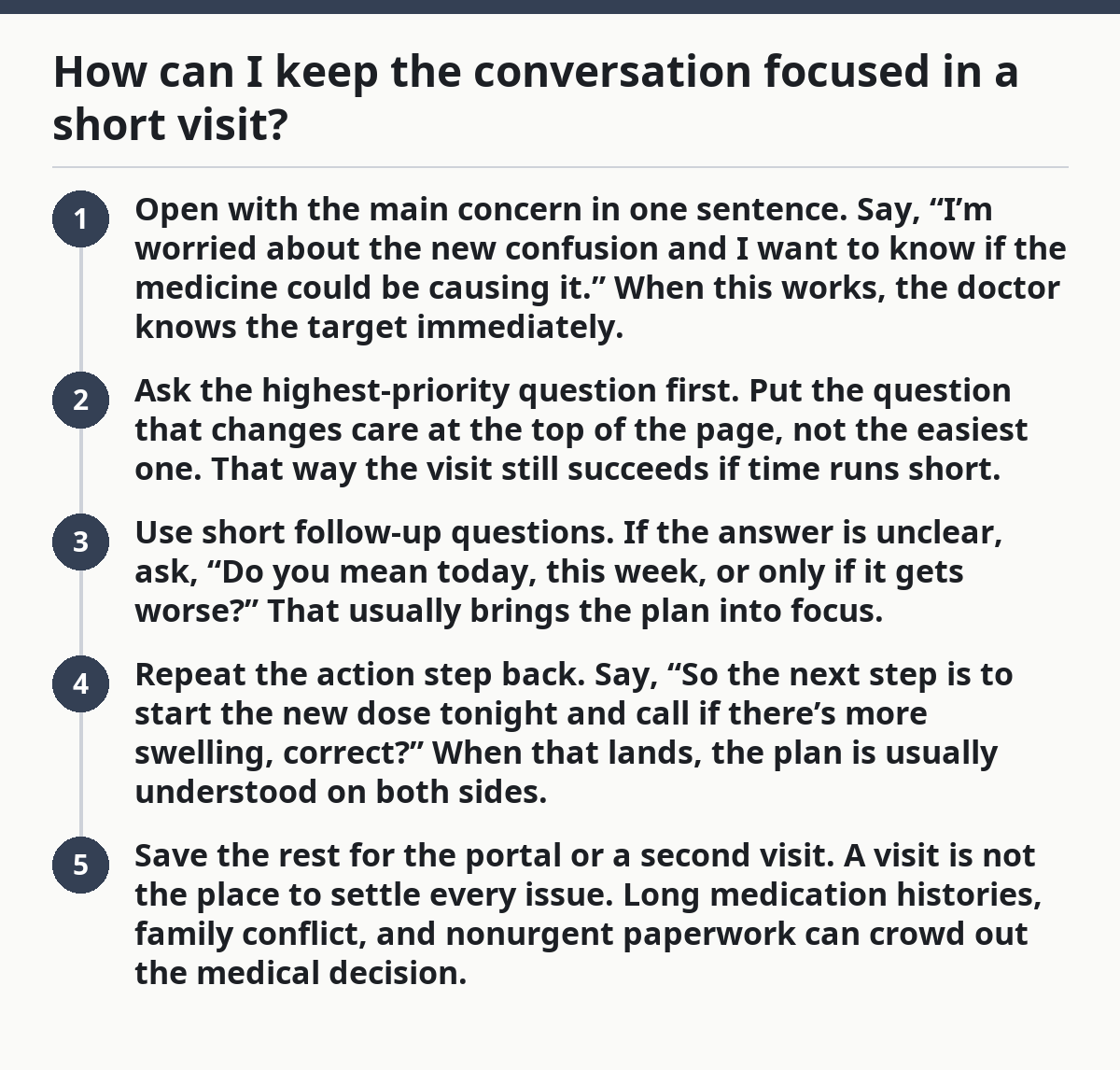
Keep the conversation focused by putting the hardest question first, using one page of notes, and stopping to confirm the answer before moving on. That approach matters most when the appointment is 10 to 15 minutes and the room feels rushed.
A practical order looks like this:
- Open with the main concern in one sentence. Say, “I’m worried about the new confusion and I want to know if the medicine could be causing it.” When this works, the doctor knows the target immediately.
- Ask the highest-priority question first. Put the question that changes care at the top of the page, not the easiest one. That way the visit still succeeds if time runs short.
- Use short follow-up questions. If the answer is unclear, ask, “Do you mean today, this week, or only if it gets worse?” That usually brings the plan into focus.
- Repeat the action step back. Say, “So the next step is to start the new dose tonight and call if there’s more swelling, correct?” When that lands, the plan is usually understood on both sides.
- Save the rest for the portal or a second visit. A visit is not the place to settle every issue. Long medication histories, family conflict, and nonurgent paperwork can crowd out the medical decision.
The common mistake is trying to impress the doctor with a full story. A 3-minute monologue often leaves no room for decisions. A tight opening, 3 priority questions, and a repeat-back usually get better results.
Another mistake is answering for the patient too quickly. Family caregivers often know the background, but the person seeing the doctor still needs space to describe symptoms directly when possible. If the patient can speak, let that happen before jumping in.
What should a family caregiver bring to write down answers?
Bring one note page, a pen, the medication list, and a phone ready to record reminders if the clinic allows it. Those four things are usually enough to capture a 15-minute visit without scrambling.
For note taking, I prefer a simple layout with 4 boxes:
- main concern
- doctor’s explanation
- next step
- when to call back
A notebook with 1 divider tab works better than loose scraps. If I use a phone, I should open a blank note before the doctor comes in so I am not typing while the answer is already moving on. If the office permits recording, ask first rather than assume. Some practices are fine with it; others are not.
As I write, exact terms matter later. Examples include the name of a medicine, the test ordered, the follow-up interval, or the specialist’s name. One wrong word can matter if I later call another office and try to repeat the plan.
If the doctor uses a patient portal, ask whether written instructions will appear there. That helps when the page of notes is messy or when another family member needs the same information. It also cuts the risk of forgetting a detail from a longer appointment.
This is the section most generic articles miss: the record of the visit is part of the visit. Good questions do not help much if I cannot remember the answer on the drive home.
What questions should be on every caregiver’s short list?
The short list should cover cause, treatment, warning signs, next step, and follow-up. Those 5 items cover most routine visits without turning the appointment into an interrogation.
A useful default list is:
- What do you think is causing the problem?
- What should change now?
- What side effects or warning signs matter most?
- What is the next step if this does not improve?
- When should I contact your office again?
I would not use this list the same way for every situation. It is wrong for a family caregiver who is only dropping off forms, and it is too thin for a complex new diagnosis with multiple specialists. It also does not replace specialty-specific questions, such as what a cardiologist wants to see in blood pressure readings or what a neurologist considers a red flag. The value is in starting from the same 5 questions and then adding the symptom, medication, test, or follow-up items that fit the visit.
If the appointment is about a sudden change, the list should lean toward urgency and safety. If it is a routine checkup, the list can lean toward medicines and follow-up timing. If it is a specialist visit, it should lean toward the one decision that specialist is there to make.
The point is not to sound prepared. The point is to walk out with a plan that survives the next 24 hours, the next 7 days, and the next appointment.
What questions should a caregiver ask the doctor?
A caregiver should ask what changed, why it changed, what to watch for, and what happens next. Those questions help turn symptoms, medicines, test results, and follow-up instructions into one clear plan. If the visit is short, ask the most urgent question first and save the rest for the portal or a second appointment.
How do I prepare for a medical appointment for someone else?
Prepare a one-page agenda, a current medication list, and the main symptom changes with dates or timeframes. Then choose the top 3 questions that matter most for this visit. A 10-minute appointment goes better when the doctor can see the goal in the first minute.
How do I keep track of what the doctor says?
Write down the diagnosis, the next step, the deadline, and who to call if things change. A notebook page with 4 labeled sections works well, and a phone note can help if the office allows it. If I am unsure, repeat the plan back before leaving.
Drafted with AI; not yet reviewed by a person.