Last updated: November 19, 2026
Quick Answer: the safest transfer help often takes 1 or 2 people, the right aid, and a clear plan before anyone moves. How to help a caregiver with transfers, repositioning, and getting in and out of bed means setting up the space, checking readiness, and choosing the right method for the person’s strength and balance. Transfer assistance is how you help someone move safely between bed, chair, toilet, or wheelchair. The safest help usually uses the right device, the right body position, and, when needed, two people instead of one. The steps below show what to do first, what to watch for, and when to stop.
Key Takeaways
- Clear the area, lock the bed or wheelchair, and keep the right aid within reach.
- Move in bed first, then sit up, then stand.
- Use a stand-pivot transfer when the person can bear some weight and follow directions.
- Use a slide sheet or a second helper when the person cannot bridge, turn, or scoot without skin drag or a hard pull.
What to do before you touch the person
Picture this: you’re standing beside a bed, trying to help someone sit up, and the room is tight, the brakes are off, and the sheet is bunched under their back. Start by clearing the space, locking the wheelchair or bed, and making sure you have the right aid in reach.
You need that setup before anyone moves.
- Lock and clear the space. Lock wheelchair brakes, raise the bed to a working height if it’s adjustable, and move clutter, rugs, and footrests out of the path. You should be able to stand close with both feet planted.
- Gather the aid first. Bring the gait belt, slide sheet, walker, or wheelchair before you begin. If a hospital bed is available, set it so the person is not starting from a flat, low surface unless that is the plan.
- Check the person’s readiness. Ask if they feel dizzy, weak, or in pain, and look for lines, tubes, casts, or sore spots that could catch. If they cannot follow simple cues or cannot bear weight, stop and get the right help.
- Set your own stance. Keep one foot slightly ahead of the other, knees bent, and your back neutral. Your hands should be ready to guide, not to lift with your arms.
- Agree on the count. Say exactly what happens next: “On three, sit up,” or “On three, stand.” The move goes smoother when both people know the timing.
If the setup looks crowded or rushed, pause.
That is the warning sign.
How do you help someone get in and out of bed?
Help them move in bed first, then sit, then stand. A safe bed transfer is a sequence, not one big lift, and that matters when the person is weak, stiff, or using a hospital bed or walker.
- Roll the person to one side. Bend the far knee, guide the shoulder and hip together, and turn as one unit. You should see the person lying on their side with the top knee bent for balance.
- Slide the legs off the bed. As the person turns toward the edge, lower the legs toward the floor while guiding the shoulders up. The goal is a stable sitting position with both feet finding the floor.
- Help them sit upright. Use the gait belt if one is available, and keep one hand ready near the trunk or shoulder blade rather than pulling on the arm. The person should be sitting with hips at the edge of the bed and not sliding.
- Pause before standing. Wait a few seconds for dizziness, shortness of breath, or leg weakness. If they look pale or say they feel off, sit back down and try again later.
- Stand on the count. Lean them forward slightly, bring the nose over the toes, and push up from the bed or armrests if they can. You should see knees straighten and the person come to standing without being yanked.
- Turn in small steps. Pivot toward the chair or walker, keeping the feet under the body. Big twists strain knees and hips.
- Sit with control. Back up until the legs touch the seat, then lower slowly. A good sit ends with hips all the way back and hands still balanced.
A smooth bed exit is slower than people expect.
That is normal.
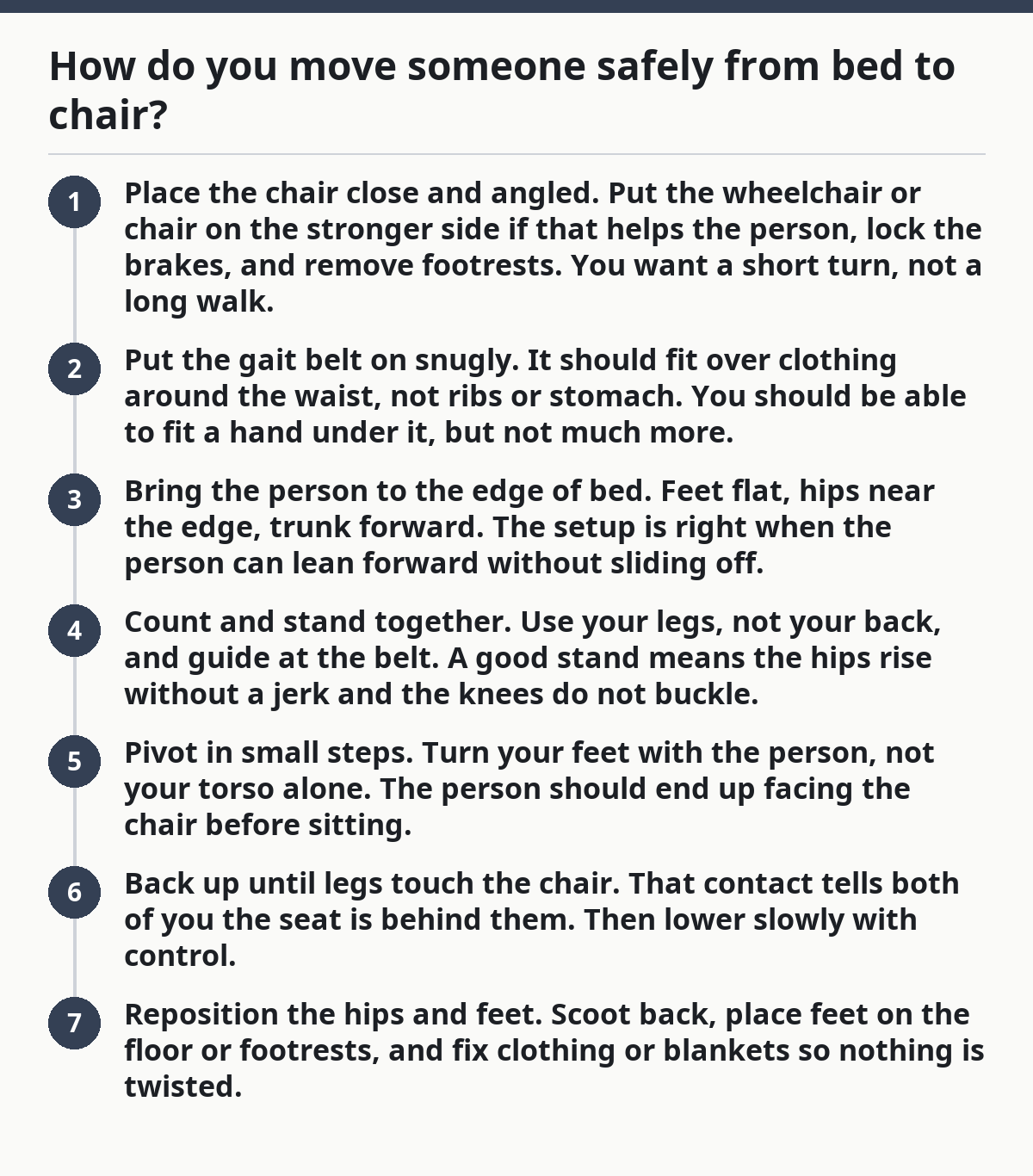
How do you move someone safely from bed to chair?
Use a stand-pivot transfer when the person can bear some weight and can follow directions. If the person cannot stand at all, the move needs another method, not a stronger back.
- Place the chair close and angled. Put the wheelchair or chair on the stronger side if that helps the person, lock the brakes, and remove footrests. You want a short turn, not a long walk.
- Put the gait belt on snugly. It should fit over clothing around the waist, not ribs or stomach. You should be able to fit a hand under it, but not much more.
- Bring the person to the edge of bed. Feet flat, hips near the edge, trunk forward. The setup is right when the person can lean forward without sliding off.
- Count and stand together. Use your legs, not your back, and guide at the belt. A good stand means the hips rise without a jerk and the knees do not buckle.
- Pivot in small steps. Turn your feet with the person, not your torso alone. The person should end up facing the chair before sitting.
- Back up until legs touch the chair. That contact tells both of you the seat is behind them. Then lower slowly with control.
- Reposition the hips and feet. Scoot back, place feet on the floor or footrests, and fix clothing or blankets so nothing is twisted.
Here’s the catch: if the person drags a leg, collapses at the knees, or cannot follow the count, stop the stand-pivot.
That move is the wrong tool.
For transfer assistance basics, this is where the hub topic belongs: what a caregiver does day to day. Keep this page focused on the hands-on move itself.
When should you use a slide sheet or two people?
Use a slide sheet or a second helper when the person cannot bridge, turn, or scoot without skin drag or a hard pull. A slide sheet reduces friction; two helpers reduce strain and help keep the body lined up.
- Use a slide sheet for side-to-side moves in bed, scooting up in bed, or turning when the person cannot help much with legs or arms.
- Use two people when the person is heavy for the caregiver, has poor trunk control, has one weak side, or needs one person to guide the upper body while the other controls the legs.
- Use a hospital bed if the head or height adjustment makes the move safer. A 2-inch or 4-inch change in height can make a big difference in leverage.
- Do not yank under the arms. That can injure shoulders and gives poor control.
- Do not let skin drag across sheets. Friction can cause pain and skin breakdown, especially on heels, hips, and tailbone.
A slide sheet is not magic.
It still needs good timing.
The best move is often short, planned, and quiet. One person leads the head and shoulders, the other keeps the pelvis and legs aligned, and both move on the same count. If the person starts sliding instead of turning, reset and try again with the sheet flatter.
How do you reposition someone in bed without hurting them?
Repositioning in bed works best when you move the body in small, complete turns instead of tugging on the shoulders or feet. The goal is comfort, pressure relief, and straighter body alignment, not speed.
- Start with the head and shoulders. Guide the upper body toward the side you want them to face. You should see the trunk turn before the legs do.
- Bend the far knee. This gives the body a lever for rolling and keeps the move from being all upper body.
- Roll from shoulder and hip together. Move the person as one unit rather than pulling one limb at a time. The body should land on the side with fewer gaps under the back.
- Use pillows for support. A pillow behind the back, between the knees, or under the arm can keep pressure off bony spots. The person should look settled, not tilted backward.
- Check skin and comfort. Look at heels, tailbone, elbows, and shoulder blades. If the position creates redness or pain, change it.
- Turn on a schedule. Many care plans use a regular turning schedule set by the care team or facility, often written down near the bed. Follow the plan that has already been given for that person.
- Finish with the call light and essentials within reach. Water, glasses, tissues, and the call button should be close enough to grab without twisting.
The truth is, repositioning is often the part people rush.
That is the mistake.
What body mechanics keep the move safer?
Good body mechanics keep the load close, the strain low, and the move under control. This is not about looking careful; it is about keeping your spine out of trouble during a 30-second transfer that can go wrong fast.
- Keep the person close to your center of gravity.
- Widen your stance so you have a stable base.
- Bend at the hips and knees, not at the waist.
- Avoid twisting while bearing weight; step your feet instead.
- Use a count every time so you do not lift early or late.
- Tighten the gait belt only enough to control, not squeeze.
- Keep the move at a height that lets your hands stay near waist level when possible.
One common error is reaching across the bed with straight arms. That feels small, but it turns a short move into a back strain. Another is lifting before the person is balanced, which makes both of you fight the same wobble.
What equipment helps, and what are its limits?
A gait belt, slide sheet, walker, wheelchair, and hospital bed each solve a different part of the problem. None of them replaces judgment, and none of them fixes a transfer that the person cannot safely do.
The gait belt gives you a firm handhold at the trunk during stand-pivot transfers. It works best when the person can bear weight and follow simple directions. It is the wrong choice if the belt would sit on a wound, a feeding tube site, or a painful abdomen.
The walker helps after standing, not during the first lift from the bed. It gives a steady frame for short steps, but it does not stop someone from fainting or buckling. The wheelchair needs brakes locked and footrests out of the way before any sit-down transfer.
The hospital bed helps by changing height and angle. That makes bed mobility easier, but it also tempts people to skip the planning step. Do not. A bed that raises does not make a weak transfer safe on its own.
If the person needs more than one helper, a slide sheet, or an assistive lift that has already been prescribed, use that plan.
Not a guess.
For a broader overview, see our guide to mobility aids and hospital beds. If the person has ongoing balance problems, fall prevention can also help reduce transfer risk. For people who need more support at home, caregiver safety covers strain reduction and safe handling basics.
FAQ
When should you not help someone transfer alone?
You should not transfer alone when the person cannot stand steadily, cannot follow directions, or needs more support than one person can give. If there is a history of falls, sudden weakness, or the person’s feet keep slipping, stop and get the right help or equipment for that move.
How do you move someone safely from bed to chair?
You move someone safely from bed to chair by locking the chair, bringing the person to sitting, standing on a count, and pivoting in small steps. The transfer works best when the chair is close, the gait belt is snug, and the person can bear at least some weight.
What equipment helps with turning in bed?
A slide sheet, pillows, and a hospital bed with height or head adjustment are the main tools for turning in bed. A slide sheet reduces friction, while pillows hold the new position and protect pressure points. A turning schedule helps keep the moves regular and planned. For a bed setup overview, see hospital beds.
How often should someone be repositioned?
The timing depends on the person’s care plan, skin risk, and mobility level. Many plans use a regular turning schedule, but the exact timing should match the instructions already in place for that person. If pain, breathlessness, or skin redness shows up sooner, the position needs to change sooner too. For skin concerns, pressure injury prevention explains what to watch for.
Drafted with AI; not yet reviewed by a person.