Last updated: November 19, 2026
Quick answer: To prepare for the first day of in-home care from an outside aide, have the care plan, emergency contacts, medication list, keys, and home access instructions ready before the aide arrives. That preparation makes the first shift clearer and faster.
Key Takeaways
- Gather the care plan, emergency contacts, medication list, keys, and access instructions before the first visit.
- Stock the home so the aide can find basic supplies right away.
- Cover routines, task limits, house rules, and backup steps in the first handoff.
- Break the day into repeatable blocks with times and small exceptions.
The first day of in-home care from an outside aide goes better when the care plan, emergency contacts, medication list, keys, and home access instructions are ready before the aide walks in. That setup turns a shaky handoff into a clear start. The steps below show exactly what to prepare, in order.
What to have ready before the aide arrives

Since the care plan, emergency contacts, medication list, keys, and home access instructions are the basics, get them together first and the visit starts with less guessing.
-
Put the care plan on one page. Include the daily tasks, the usual wake-up and meal times, any mobility limits, and what “done” looks like for the first shift. If the plan is clear, the aide should be able to scan it in under 5 minutes and start without chasing you for basics.
-
Make a contact sheet. List the family contact, the backup decision-maker, the doctor’s office if it belongs in the home file, and the emergency number to call first. Keep it printed, not only in a phone, so the aide can find it fast when the screen is locked or the battery is low.
-
Set out the medication list. Include the name on the bottle, the dose, the usual time, and any special directions already written by the prescriber or pharmacy label. If medication help is part of the job, the list should match the bottles on the shelf exactly.
-
Gather the keys and entry tools. Put the front door key, gate code, garage opener, and alarm instructions where the aide can get them without hunting through drawers. If the house uses a lockbox or keypad, test it once before the first visit.
-
Write the home access instructions. Note which door to use, where to park, how to ring the bell, where the pets are, and what to do if no one answers. A new aide should be able to enter, settle in, and find the main spaces without a guided tour.
However, this is also the part you can finish the night before. A tidy packet beats a half-remembered text thread every time.
How do I set up the house for the first visit?
Set up the house so the aide can work without hunting for soap, gloves, towels, or the right light switch. The goal is not a magazine house; it’s a home where a stranger can do the job in a 15-minute orientation and leave the place as they found it.
Start with the spaces the aide will use first. Clear a path from the entrance to the kitchen, bathroom, bedroom, and the main chair or bed. If there are loose cords, rugs that curl, or a dark hallway bulb, fix those before day one. Small obstacles turn into wasted time.
Then stage the supplies. Put cleaning wipes, tissues, paper towels, gloves if needed, trash bags, laundry detergent, extra soap, and any routine care items in the same cabinet or basket. If the aide is expected to help with a shower, place fresh towels and a non-slip mat where they can be reached quickly.
Because every household is different, the setup only needs to be predictable. Enough means the aide can locate the basics in the first 10 minutes without opening every cupboard.
- Keep paths clear from room to room.
- Label a few drawers or shelves if the layout is confusing.
- Put valuables and private papers away.
- Show where to wash hands and where to throw away trash.
- Test lights, bathroom fans, and any door locks.
This is also the time to set boundaries. If there are rooms that are off-limits, say so plainly. If a pet needs to be crated, if shoes stay at the door, or if the aide should not use a certain bathroom, write that down and say it out loud.
What should the first-day handoff cover?

The first-day handoff should cover routines, task limits, house rules, and what to do if the day goes off script. If that sounds plain, good. Plain is what keeps a new arrangement from turning into a guessing contest.
Picture yourself walking the aide through the home while holding a short paper checklist. The aide is listening for the same things a mechanic listens for in an unfamiliar car: what runs normally, what never gets touched, and what needs a call before action. That orientation should take about 20 to 30 minutes, not an hour of wandering.
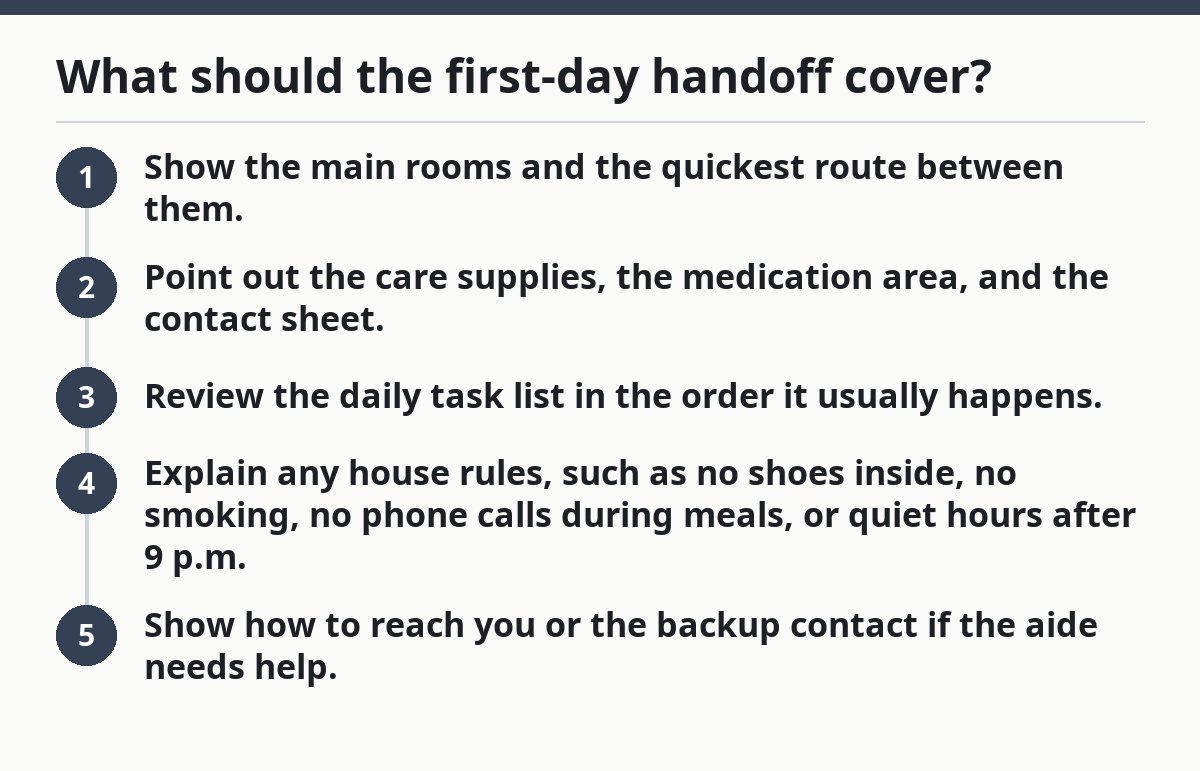
Use a simple order:
- Show the main rooms and the quickest route between them.
- Point out the care supplies, the medication area, and the contact sheet.
- Review the daily task list in the order it usually happens.
- Explain any house rules, such as no shoes inside, no smoking, no phone calls during meals, or quiet hours after 9 p.m.
- Show how to reach you or the backup contact if the aide needs help.
Then talk through exceptions. If the person receiving care has memory loss, fall risk, swallowing trouble, or a strict sleep schedule, say exactly what the aide should watch for and what should trigger a call. Don’t assume “they’ll figure it out.” They won’t, and that is not a failure. It just means the start was underwritten.
A strong first-day handoff also names what the aide should not do. If lifting is not allowed, if the stove is off-limits, or if certain errands require permission first, say it directly. Short sentences work best here.
How do I explain routines to a new caregiver?
You explain routines by turning the day into repeatable blocks with times, triggers, and small exceptions. A good routine description sounds like something someone could follow at 7 a.m. or 7 p.m. without guessing.
Picture the aide standing in the kitchen while you point to the breakfast table, the pill organizer, and the notes on the fridge. The point is not to tell a life story. The point is to show what happens first, what comes next, and what changes on hard days.
Write routines in three parts:
- Morning: wake time, bathroom help, wash-up, breakfast, medications, and clothing choices.
- Midday: meals, hydration, rest time, walking, laundry, or appointments.
- Evening: dinner, cleanup, medicines, safety checks, and bedtime.
If the person has a favorite mug, a fixed TV show, a specific way they like pillows arranged, or a food texture they refuse, include that detail. Small habits keep the day calm. Big speeches do not.
If the routine changes by day, make that visible. A Monday may include grocery pickup, while Thursday may include a 2 p.m. appointment. Put those differences on the same sheet, not buried in a text thread. When the aide sees the pattern, the day feels less like improvisation.
The truth is, routines are easier to follow when they are concrete. “Help with lunch” is vague. “Sandwich, fruit cup, water, then dishes in the sink” is useful.
What communication rules should be in place on day one?
Communication rules should tell the aide who to call, when to call, and what counts as urgent. That clarity keeps small problems from sitting silent for half a day.
Picture a message arriving mid-shift: the stove light is blinking, the person receiving care skipped lunch, or the front door code won’t work. If no one has named the backup contact, the aide is stuck waiting for permission. Because of that, the communication plan needs to be simple.
Set these rules before the first shift starts:
- Who is the main contact during the visit.
- Who is the backup if the first person does not answer.
- Which issues need a call right away.
- Which issues can wait for the end of the shift.
- Whether the aide should text, call, or leave a written note.
Put the communication method in writing. If you want a text after lunch, say that. If you want a phone call for any fall, medication error, or lock issue, say that too. The medium matters because some aides can text during the day and others cannot.
Leave room for notes. A simple notebook on the counter works well for many homes. It can hold meal times, bathroom concerns, mood changes, chores completed, and anything that needs follow-up. That paper trail is plain, but it helps the next shift start with the facts.
On the flip side, too many channels make a mess. If the aide is told to text one person, call another, and leave a note in a third place, important details get split apart. Pick one primary method and one backup. No more.
What should I check after the aide leaves?
You should check the handoff, the supplies, and the notes after the aide leaves so the second visit starts cleaner than the first. The first day is not just about entry; it’s also about seeing what was missing once the job actually began.
Picture the house after the shift ends. The pills are back in place, the trash is out, the note is on the counter, and the towels are where they should be. Or they’re not. Either way, this is the moment to fix the system, not the person.
Review three things the same day:
- Did the aide find the supplies without trouble?
- Did the schedule match the care plan, or did anything need changing?
- Did the contact list work when needed?
If something went wrong, adjust the setup before the next shift. Maybe the keys were too hard to find, the medication sheet was missing a dose time, or the bathroom cabinet was too crowded. That is normal on day one. What matters is whether the next day is better.
This is also the place to update the care plan with real-world details. If lunch took longer than expected, if the person preferred a different wake-up order, or if a task belongs at a different time, write it down now. Small edits make the next handoff smoother.
For related planning across services, the hub on caregiver coordination with providers and services can help you keep the larger system straight without rebuilding it every week.
Common mistakes that make day one harder
The biggest mistakes are vague instructions, hidden supplies, and a house that looks prepared from the hallway but not in the rooms that matter. Those errors cost time and confidence on the first visit.
Picture the aide asking where the thermometer is, where the clean towels are, and which door to use, while you’re trying to answer from another room. That friction is not dramatic, but it drains the start of the relationship fast.
Watch for these problems:
- Too much verbal info. A long conversation sounds thorough, but it rarely sticks. Use a one-page sheet for the care plan and a short list for house rules.
- No backup contact. If the main contact is at work or driving, the aide may be stalled on a simple question for an hour.
- Supplies spread out. When wipes are in one bathroom, gloves in another, and laundry soap in the garage, day one turns into a treasure hunt.
- Unclear limits. If the aide does not know whether they may help with lifting, cooking, or errands, they may avoid tasks that should have been done.
The fix is simple but not casual: write it down, show it once, and keep the essentials in the same place every time. A new aide can learn a home quickly. A new aide cannot read minds.
FAQ
What should you have ready before the aide arrives?
Have the care plan, emergency contacts, medication list, keys, and home access instructions ready before the aide arrives. That packet should also include house rules, the main task list, and any safety notes about pets, alarms, or off-limits rooms. If possible, keep everything in one folder near the entrance.
How do you explain routines to a new caregiver?
Explain routines as a simple sequence, not a story. Start with the usual wake-up time, meals, medications, rest periods, and bedtime, then add the small details that matter, like preferred foods or how pillows should be arranged. A one-page routine sheet is easier to follow than a long conversation.
What information should a new aide receive on day one?
A new aide should receive the care plan, emergency contacts, medication list, house rules, task list, and home access instructions on day one. The aide also needs to know who to call, what counts as urgent, where supplies are kept, and which tasks are off-limits. Clear written notes reduce confusion fast.
Drafted with AI; not yet reviewed by a person.