How to prepare a one-page caregiver summary for doctors and aides

Last updated: November 19, 2026
Quick Answer: A one-page caregiver summary for doctors and aides is usually 1 page long and should be updated before visits, hospital discharges, medication changes, or a new aide’s start date. Best case? It gives the next person the essentials fast: who the person is, what diagnoses matter now, what medicines they take, what allergies they have, and what changed recently.
A caregiver summary sheet is a one-page handoff document that tells doctors and aides the essentials fast: who the person is, what diagnoses matter now, what medicines they take, what allergies they have, and what changed recently. It fits best on 1 page, uses plain language, and can be updated in a few minutes before an appointment or shift change. For safety, confirm the contents with the person’s clinician or care team when anything affects diagnosis, medication, or emergency decisions. NIH MedlinePlus and CDC both stress clear, current health information for safe care transitions.
What a good caregiver summary sheet does
A good caregiver summary sheet gives the next person enough to act safely in under 60 seconds. Not a diary. Not a full chart. Not a replacement for the medical record. It is a quick-reference page for a primary care doctor, specialists, a home health aide, or a family caregiver who needs the same facts without hunting through 12 pages of notes.
The strongest version does 4 jobs at once:
- It names the person clearly, with a date of birth and one main diagnosis or reason for care.
- It lists current diagnoses, allergies, and medicines in a format that can be read at a glance.
- It flags recent changes such as a new symptom, hospital discharge, fall, medication change, or equipment issue.
- It tells the reader what matters most in daily care, including preferences and emergency contacts.
That last piece is where a generic medical summary often falls short. A doctor may need the diagnosis list and medication list. An aide also needs the practical detail: Does the person eat better in the morning? Do they need a walker at all times? Is there a hearing aid to keep track of? Those small details cut down confusion fast.
A one-page summary is a good fit when care is active but relatively stable, when several people rotate in and out, or when there is one central condition that drives the rest of the care. It is a poor fit when the person’s history is complex enough that every visit requires a full timeline. In that case, the one-pager still helps, but it should point to a longer chart or packet kept nearby.
For a broader system of handoffs, this sheet slots neatly into the caregiver coordination and communication hub.
How to prepare a one-page caregiver summary
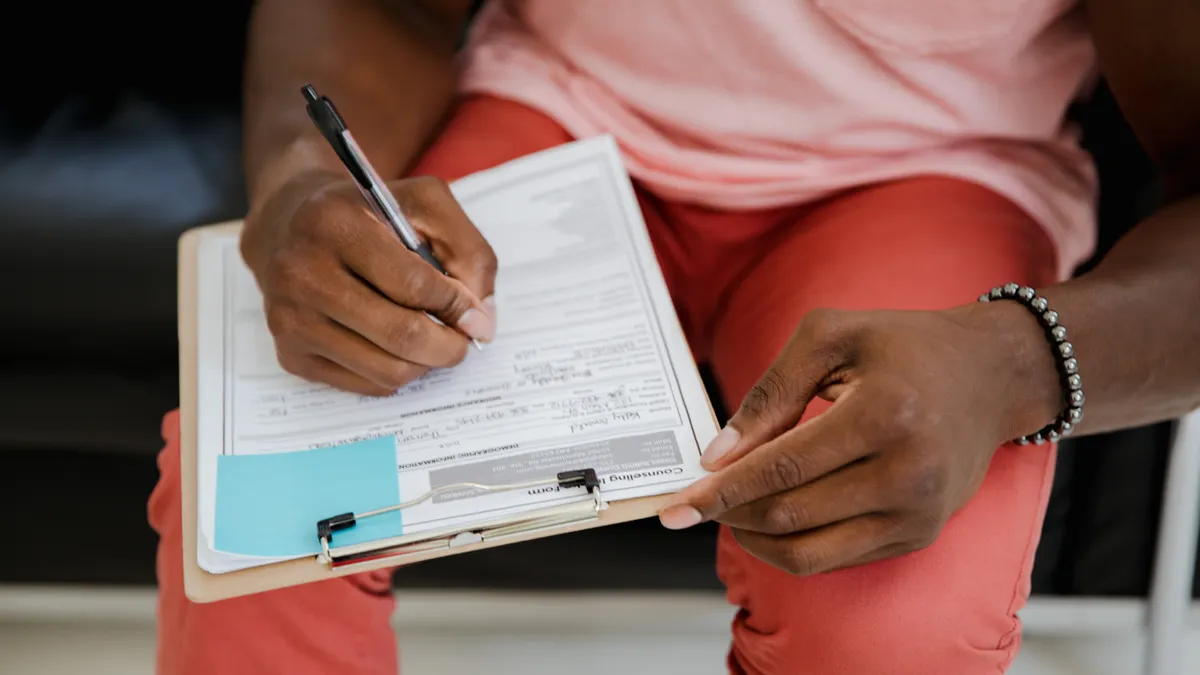
Start by pulling together the newest facts, then compress them onto one page in the order another person will scan them. Identity first. Then diagnoses, medicines, allergies, changes, preferences, contacts. If anything is unclear or changing quickly, check with the relevant professional before finalizing it. AHRQ recommends clear, accurate communication during transitions of care.
-
Put the person’s identifying details at the top.
Include full name, date of birth, phone number if helpful, and the date the sheet was last updated. If the person uses a preferred name, put it right under the legal name. When this is done well, the first 2 lines tell any clinic or aide they have the right person. -
List the current diagnoses that explain today’s care.
Write the main conditions, not every past problem. Use plain terms like “heart failure,” “type 2 diabetes,” or “stroke recovery,” and keep the list to the conditions that affect visits, medications, mobility, or monitoring. If you are unsure which diagnoses belong on the page, confirm them with the doctor or nurse before using the sheet. Once the page starts reading like a 3-year chart, it has gone too far. -
Add the medication list in a readable format.
Include medicine name, dose, how often it is taken, and the reason if it is not obvious. If you do not know the exact dose, stop and verify it from the bottle, after-visit summary, or medication list before using the sheet. A clean list lets a doctor compare it against the chart and lets an aide spot missing or duplicate doses. For medication safety basics, see NHS medicines guidance. -
Write allergies and reactions, not just the allergy name.
Note the allergen and what happened, such as “penicillin — rash” or “latex — swelling.” If there are no known allergies, say that plainly. That line matters because “allergy” without a reaction can lead to guesswork in an urgent visit. -
Summarize recent changes in 3 to 5 bullets.
Include what changed, when it changed, and who noticed it. Good examples are “two falls this month,” “new swelling in both ankles,” “hospital discharge on March 12,” or “started using a cane after knee pain worsened.” Recent changes are the part most likely to matter in the next 48 hours. -
Add the daily care preferences that keep routine care smooth.
Keep this section short: mobility aid, diet notes, communication needs, bathing preferences, sleep routine, or behavior that helps the person cooperate. For a home health aide, this may be the difference between a tense shift and an easy one. -
Finish with emergency contacts and the most important next step.
List the primary caregiver, backup contact, doctor’s office, and any specialist if relevant. Add one line that says what to do if the person worsens, such as “Call daughter first, then PCP office, then 911 for chest pain or trouble breathing.” The page should end with action, not clutter.
A good test is this: hand the page to someone who does not know the person and ask what they would do in the next 2 minutes. If they can answer that question, the sheet works.
What should be on a caregiver summary sheet?
A caregiver summary sheet should be built from the facts a doctor or aide needs before the first question is asked. The essentials are current diagnoses, medication list, allergies, recent changes, care preferences, and emergency contacts. Leave one out, and the page is incomplete. For more on what belongs in the record versus a handoff page, see the care plan basics and medication list guide.
For doctors, the medical core matters most. That means the current diagnoses, the medicine list, and the allergies with reactions. A primary care doctor may also need the name of the relevant specialist, such as cardiology, neurology, or oncology, if that specialist is driving part of the plan. Keep the medical language simple and current. If you are uncertain about what belongs here, ask the clinician or pharmacist to review it.
For aides, the daily routine matters just as much as the diagnosis. A home health aide needs to know whether the person uses a walker, needs help transferring, has swallowing problems, follows a low-sodium diet, or becomes confused at a certain time of day. Those details are not “extra.” They change how the day is managed.
Use a single page so the eye can find the important lines without scrolling. If you print it, use a font large enough to read at arm’s length, with clear headings and enough space between lines. A cramped page defeats the whole point.
One practical rule helps: if the item will not change how the next person acts today, leave it off. A long history of old surgeries, remote lab values, and childhood illnesses may belong in the chart, but it does not belong on the one-page handoff sheet unless it changes current care.
A good summary is selective. That is its strength.
How do I make a quick medical summary for appointments?

A quick medical summary for appointments should be built the night before or the morning of the visit, using the latest medication list and the 3 most recent changes. That is enough for a routine office visit, especially when the appointment is with a primary care doctor or a specialist who already knows the patient. If the visit is urgent or complicated, check with the care team before relying on a brief page alone.
Use this order:
- Top line: name, date of birth, date prepared.
- Problem line: the reason for the visit in one sentence.
- Medical core: diagnoses, medicines, allergies.
- Change line: what is new since the last visit.
- Questions line: 2 or 3 questions the caregiver wants answered.
That last line is easy to overlook and extremely useful. If the purpose of the visit gets buried in a stack of notes, the appointment can drift. A short questions line keeps the summary focused on the reason you showed up.
A useful example of the style, without turning the page into a full form, is this:
- Reason for visit: increased shortness of breath over 2 weeks
- Diagnoses: COPD, hypertension
- Medicines: albuterol inhaler, lisinopril
- Allergies: sulfa — rash
- Recent changes: sleeping upright, lower appetite, 1 fall last week
- Questions: Is the inhaler dose correct? Does the fall change the care plan?
That format works because it is quick to scan and easy to update. It also keeps the summary tied to the current visit rather than to the whole medical history.
If the appointment is for a first-time specialist visit, add the name of the referring doctor and the reason for referral. If you have copies of recent discharge papers, lab results, or imaging reports, bring them separately; do not force them onto the one-pager. The summary should point to those records, not absorb them. For appointment prep, see the doctor visit checklist.
What mistakes make a one-page summary less useful?
Trying to cram everything onto the page is the biggest mistake. Then the summary turns into a cluttered chart, and clutter costs time. A doctor may miss the one new symptom. An aide may miss the mobility note. Keep the page to the facts that change care today.
A second mistake is using vague words like “stable,” “doing okay,” or “same as before” without naming what is actually happening. Those phrases sound helpful, but they do not tell the next person whether the blood pressure changed, whether the confusion is worse, or whether the person has started refusing meals. Replace vague wording with a concrete update and a date.
A third mistake is leaving out the last update date. A one-page summary with no date can look current when it is 6 months old. That is risky because medicines, allergies, and contact numbers change. Put the date at the top so the reader can judge how much to trust the page.
A fourth mistake is using medical shorthand only the family understands. Abbreviations that make sense in a clinic may be useless to a home health aide. Spell out terms unless you know the reader will recognize them. “UTI” may be familiar; “prn,” “qhs,” or “NPO” may not.
A fifth mistake is skipping allergies because “the chart already has them.” The point of the sheet is what travels with the person. If the allergy is on another page, it is too easy to miss during a quick handoff.
A final mistake is making the page so polished that no one wants to mark it up. A good caregiver summary sheet should be easy to revise in 2 minutes. Leave room for handwritten updates, or keep it in a digital file that can be edited fast and reprinted.
How to keep the sheet current without turning it into a log
Keep the sheet current by updating it only when something materially changes, then replacing the old copy with a new one. The summary is not a running diary; it is a snapshot. Add every daily detail, and the page stops being fast to read.
A practical rhythm is to review it:
- before each doctor appointment,
- after any hospital discharge,
- after a medication change,
- after a fall or new symptom,
- and when a new aide starts.
That is often enough for a stable situation. In a more active period, it may need attention every few days. The point is not perfection. The point is to keep the page close enough to the truth that someone can act on it.
Version control matters more than people expect. If you print copies for the refrigerator, the purse, and the folder by the door, label the current one clearly. If the same page appears in 3 places and only one is updated, confusion starts fast. Use a visible date and throw away old copies when possible.
There is also a judgment call here: not every change deserves a full rewrite. A new over-the-counter vitamin, a one-day symptom, or a minor routine note may belong elsewhere. Save the one-page summary for changes that affect care decisions, communication, safety, or daily routine. That is what keeps it useful to a primary care doctor, a specialist, and a home health aide at the same time.
A simple one-page layout that works in real life
A one-page layout should read top to bottom in the same order a rushed person thinks: who, what, what changed, what to do next. A plain 8.5 x 11 page is enough; the layout matters more than the paper size.
One clean structure is this:
- Header: name, date of birth, date updated, preferred name
- Current diagnoses: 3 to 5 lines
- Medication list: name, dose, schedule
- Allergies: allergen and reaction
- Recent changes: 3 bullets
- Care preferences: 3 bullets
- Emergency contacts: names and numbers
- Notes for today: one line
That structure keeps the page short and readable. It also makes the most important information appear early, which is what a doctor or aide needs when they only have a minute.
If you want the sheet to travel well, save it as a PDF and print one copy for the home. Keep a second copy in a folder with the medication bottles or discharge papers. If the person uses a mobile phone, you can store a digital copy there too, but the paper version still helps when the battery dies or the signal drops.
For anything that affects diagnosis, medication changes, legal decisions, or safety plans, check with the relevant professional before treating the sheet as final. A caregiver summary helps people communicate; it does not replace clinical judgment.
Key Takeaways
- A caregiver summary sheet works best when it fits on one page and is updated often enough to stay trustworthy.
- The essentials are identity, current diagnoses, medication list, allergies, recent changes, care preferences, and emergency contacts.
- Doctors need the medical facts first; aides also need the day-to-day details that affect routine care.
- The page should be selective, dated, and easy to revise in a few minutes.
- If the sheet becomes a full chart, it stops doing the job it was meant to do.
What should be on a caregiver summary sheet?
A caregiver summary sheet should include the person’s name, date of birth, current diagnoses, medication list, allergies, recent changes, care preferences, and emergency contacts. Those are the details a doctor or aide needs to read first. If the page has room, add the most important specialist and a short note about what to do if the person worsens.
How do I make a quick medical summary for appointments?
A quick medical summary for appointments should be no longer than 1 page and should lead with the reason for the visit. Then add the current diagnoses, medicines, allergies, and recent changes. If needed, bring supporting records separately rather than crowding the page.
Drafted with AI; not yet reviewed by a person.