Last updated: November 19, 2026
Helping an older adult avoid a fall at home starts with the obvious fixes: clear paths, better light, dry floors, and the right support. This guide on how to prevent falls at home when you are helping an older adult shows what to change first, what to watch in real rooms, and what not to ignore. Quick answer: focus on the bed-to-bathroom route first, because that is often the shortest path with the most risk.
Key takeaways
- Start with the spots that trip people most: walkways, stairs, the bathroom, and the path to the toilet at night.
- A walker, grab bars, a non-slip mat, and a night light can help, but only if they fit the person and the room.
- Shoes matter more than many caregivers expect; loose slippers and slick socks are a common setup for a fall.
- One small fix is better than a big plan that never gets finished.
- If falls keep happening, the problem is often a mix of clutter, poor lighting, and a device that does not match the person’s gait.
What should I fix first to reduce fall risk?
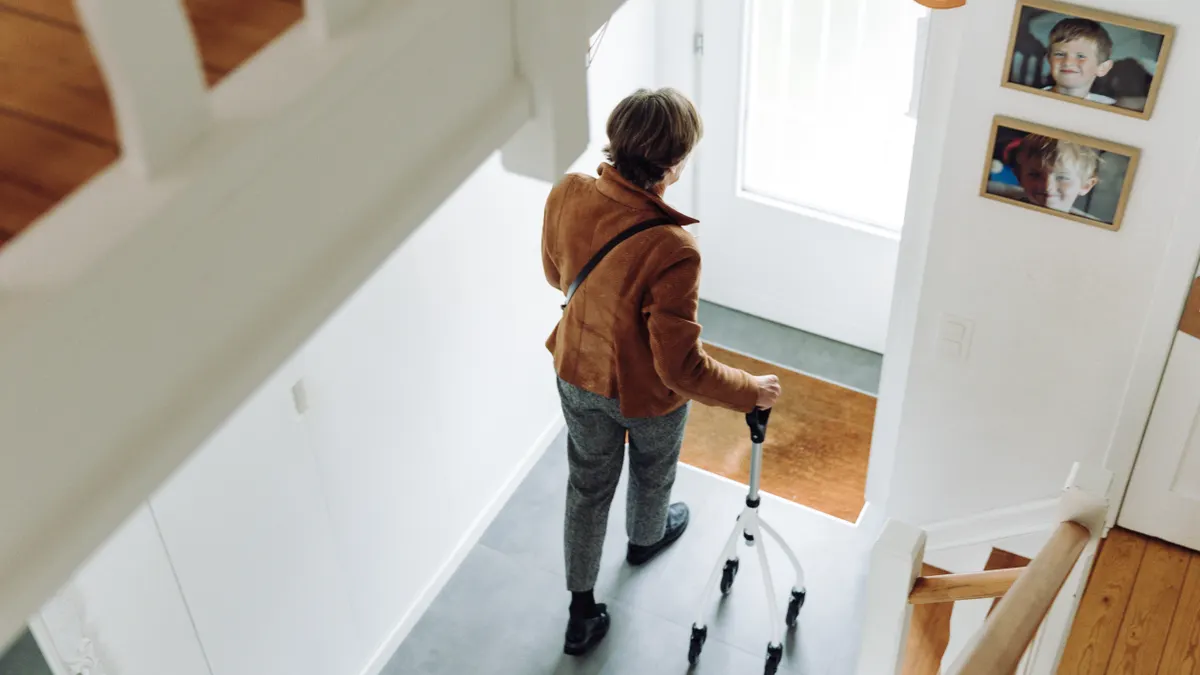
Start with the floor, the light, and the path the older adult uses most. If you only have an hour, clear the walking route, put a light where the person rises at night, and remove the easiest trip hazards first.
Picture this: you’re standing in the hallway after dinner, and the route from bed to bathroom has a charging cord, a throw rug, and one lamp switch out of reach. Fixing that path first gives you the biggest return for the least work.
- Clear the main walking route. Move baskets, shoes, cords, and low furniture from the path between bed, chair, kitchen, and bathroom. The goal is a straight route wide enough for a walker to pass without twisting.
- Remove loose floor items. Take up throw rugs, curled runners, and mats that slide. If a rug must stay, use a grip pad made for the floor type, not tape that dries out.
- Put light where feet land. Add a night light in the bedroom, hall, and bathroom entry. A wall switch or lamp the person can reach from bed is better than crossing a dark room.
- Check shoes and socks. Replace floppy slippers and slick socks with shoes that close well and grip the floor. Bare feet can work on some surfaces, but cold tile or polished wood is a bad mix.
- Watch the bathroom approach. Keep the door open if privacy and routine allow, and make sure the floor stays dry after bathing or cleaning.
The truth is, the first fix is often boring. It works anyway.
How do I spot the biggest fall risks in a real home?
The biggest fall risks are the things that hide in plain sight: clutter, bad light, slippery surfaces, and a helper setup that assumes the older adult can move the same way every day. Look at the home the way a foot does, not the way a room looks in a photo.
Picture this: you’re kneeling by a chair leg and noticing how much the room changes when someone stands up with a cane or walker. The coffee table that seemed harmless now sits right in the turning space.
- Floor hazards: cords, pet bowls, rolled-up mats, magazine stacks, and shoes left by the door.
- Lighting gaps: dark hallways, no switch near the bed, weak bulbs over stairs, and glare on glossy floors.
- Footwear problems: backless slippers, smooth soles, socks without grip, and shoes that are too big.
- Furniture placement: low chairs, soft couches, and tables that force a person to twist when standing.
- Carry habits: holding laundry, food, or a phone while walking instead of using a bag, pocket, or tray.
- Assistive device mismatch: a walker that is too tall, too short, or used as a handcart.
A home does not need to be perfect. It needs fewer surprises.
For a broader framework on the rest of the house, the home caregiving safety hub can sit above this guide without repeating it. For related help, see the home safety checklist and the fall prevention overview.
How do I make a home safer for someone who falls often?
Make the home safer for someone who falls often by changing the places they use most, not by trying to fix every room at once. A practical plan is to solve the repeated problem, then test the next one.
Picture this: you’re helping an older adult who has already stumbled twice in the same week. A full remodel is not the answer. Better spacing, better light, and a better grip underfoot often do more than expensive gear.
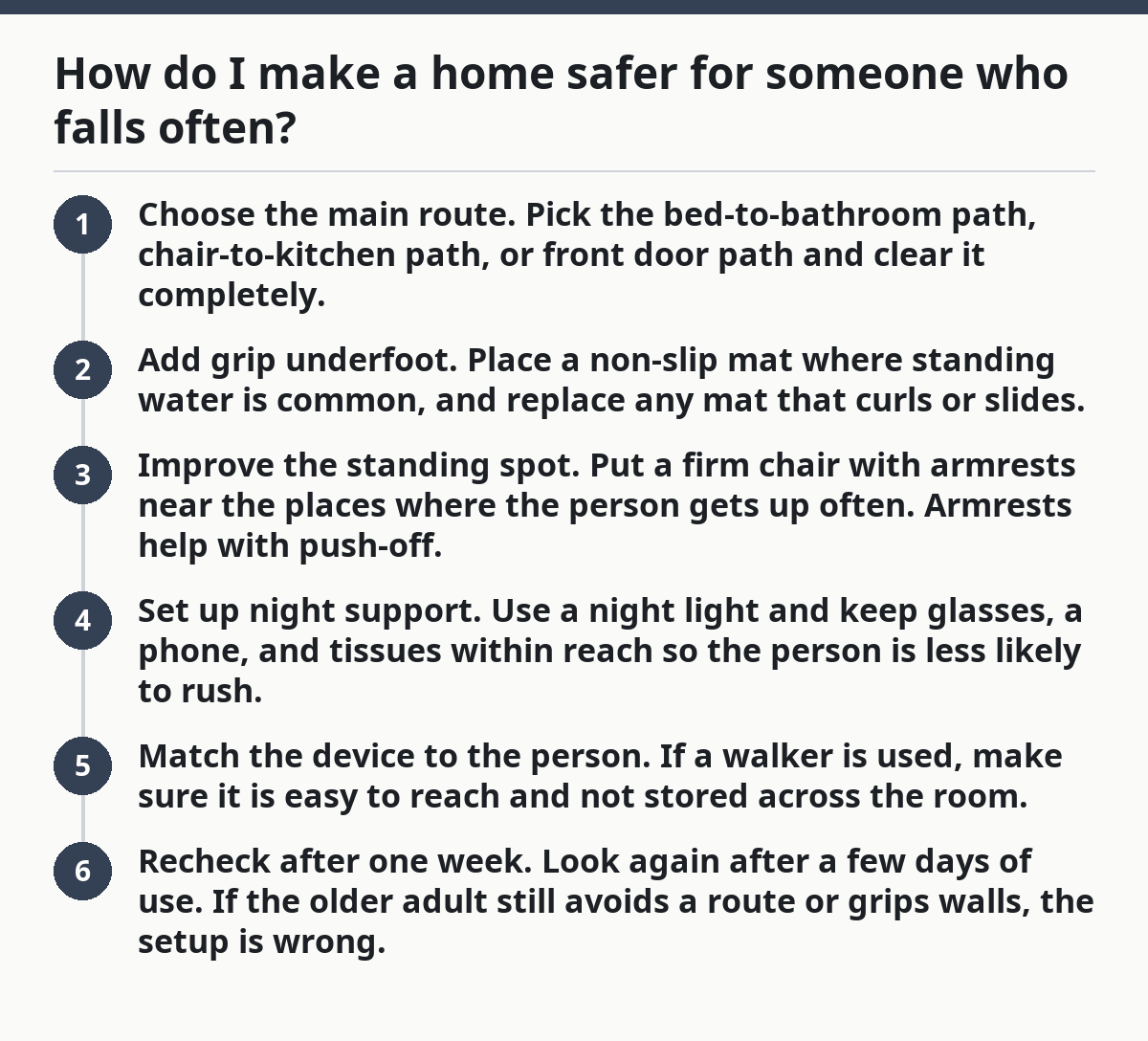
- Choose the main route. Pick the bed-to-bathroom path, chair-to-kitchen path, or front door path and clear it completely.
- Add grip underfoot. Place a non-slip mat where standing water is common, and replace any mat that curls or slides.
- Improve the standing spot. Put a firm chair with armrests near the places where the person gets up often. Armrests help with push-off.
- Set up night support. Use a night light and keep glasses, a phone, and tissues within reach so the person is less likely to rush.
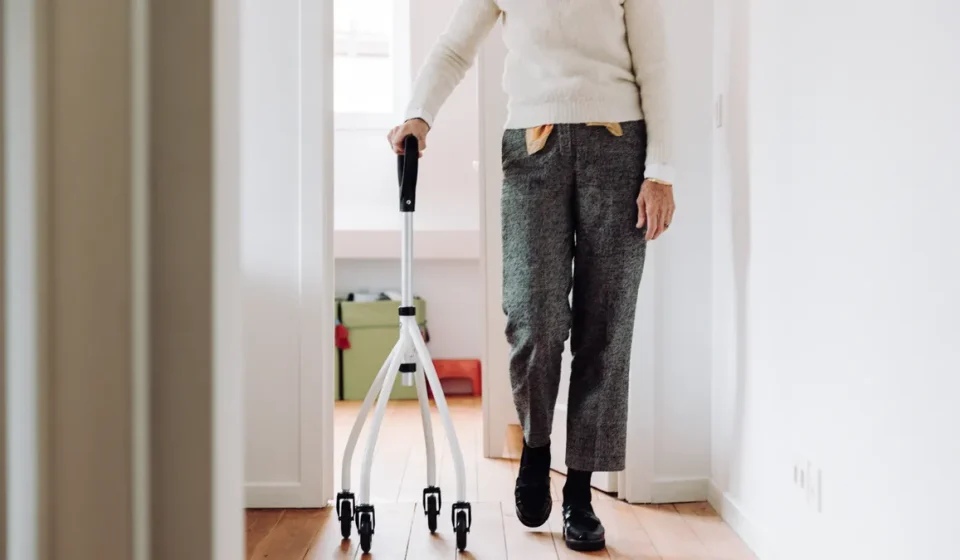
- Match the device to the person. If a walker is used, make sure it is easy to reach and not stored across the room.
- Recheck after one week. Look again after a few days of use. If the older adult still avoids a route or grips walls, the setup is wrong.
A common mistake is to add one device and stop. That can leave the real problem untouched. A grab bar in the wrong spot, a mat on a wet floor, or a walker stored too far away does not solve much.
On the flip side, one room done well can change the day. That is the point.
What should I do about the bathroom, stairs, and nighttime walking?
The bathroom, stairs, and nighttime walking are the three places most likely to punish a rushed step. Each one needs a different fix, and none of them should be left to chance.
Picture this: you hear movement at 2 a.m., and the older adult is heading for the toilet in the dark. This is when poor light, stiff joints, and sleepy judgment collide.
- Bathroom: keep the floor dry, use a non-slip mat where getting in and out happens, and install grab bars where the person reaches for support. A towel rack is not a grab bar.
- Stairs: keep both sides clear, use steady handholds, and improve light at the top and bottom. A single loose step edge can cause a bad stumble.
- Nighttime walking: place a night light in the bedroom, hall, and bath path. If the person uses a walker, it should be parked where it can be reached without crossing the room.
- Toilet path: remove baskets, cords, and low stools from the route. The shorter the route, the less chance there is to catch a foot.
The bathroom is also where helpers get overconfident. Wet tile, soap residue, and a rushed turn are enough to undo good intentions. A grab bar placed for the wrong motion helps less than people think. Here is why.
If the older adult has a pattern of slipping during bathing or transfers, the room may need a more focused change than a general cleanup. This page is about fall prevention at home, not a full bathroom redesign.
Shoes, socks, and assistive devices: what actually helps?
Shoes with a firm sole, socks with grip, and a properly sized assistive device help more than most decorative fixes. The wrong shoe or the wrong device can make a person feel supported while still setting up a fall.
Picture this: you’re looking at the floor and realize the problem is not the rug alone. It is the soft slipper that folds under the heel, the sock that slides on wood, and the cane or walker that never quite matches the person’s height.
- Choose stable shoes. Closed-back shoes with a sole that grips are safer than loose slippers.
- Use grip only where it helps. Non-slip socks can help on smooth floors, but they are not a substitute for safe footwear outside bed.
- Check the fit often. Feet swell and shrink; a shoe that fit last year may not now.
- Keep devices within reach. A walker left on the far side of the room invites risky steps.
- Do not use furniture as support. Chairs and tables move. That turns one step into a fall.
The limitation here is simple: a helper cannot “fix” balance with shoes alone. If the person shuffles, catches toes, or leans hard on nearby objects, footwear is only part of the answer. A device that is too tall, too short, or awkward in tight spaces can add risk instead of removing it.
Who Should Skip This: someone whose main problem is a narrow bathroom doorway or a cluttered nighttime route should focus there first, because the best shoe will not solve a bad layout.
Buy this if: you are helping an older adult who wears soft slippers, walks on smooth floors, or takes short trips to the bathroom at night.
Skip this if: the person already has a safe shoe setup but keeps tripping on cords, rugs, or a poorly placed walker.
What mistakes make falls more likely?
The most common mistakes are small ones that add up: leaving a rug in place, putting light in the wrong spot, and assuming the older adult will remember every change after one talk. Falls usually come from patterns, not one bad step.
Picture this: you have done a quick cleanup, but the same three hazards are still there by evening. The habit did not change, so the danger did not either.
- Hiding the hazard instead of removing it. A rug corner tucked under a table is still a trip point. Remove it or replace it with a secure mat, and if you are unsure what is safest, consult a professional or follow guidance from a home safety source.
- Using the wrong support. A towel bar, wheeled tray, or light chair is not a grab bar.
- Making the route longer. Moving the phone, lamp, or tissues farther away can force a risky walk at night.
- Leaving the floor wet. A few drops on tile can matter, especially when the person turns or stands quickly.
- Buying gear before looking at the room. A walker or non-slip mat helps only if the space fits the use.
Here’s the catch: a caregiver can do a lot right and still miss the one detail that causes the fall. That detail is often a bad turn, a dark patch, or a shoe that slips when the person pushes off.
A safer setup is usually the cheaper one too. The hard part is noticing the problem before the fall does.
What should I watch for after I make changes?
Watch for hesitation, side-stepping, wall-grabbing, and any place where the older adult says, “I don’t like that spot.” Those are signs the setup still feels unsafe, even if it looks tidy.
Picture this: the hallway is clear now, but the person still slows down at the same doorway. That pause is useful information. It means the path may be clear, but the layout still feels awkward.
- Watch the first 3 to 7 days. Early use shows where the new plan fails.
- Look for workarounds. If the person still grabs a dresser, skips the walker, or avoids the hall light, the fix missed something.
- Check for fatigue. Tired people trip more, especially at dusk and after a long day.
- Ask what feels off. A simple “Which spot feels risky?” can point to the real problem faster than guessing.
- Change one thing at a time when you can. That makes it easier to tell what helped.
If falls keep happening, a safer move is to keep the changes simple and specific while you review what the person does every day. This is where a caregiver can save time by watching real movement instead of assuming the room tells the whole story.
FAQ
What are the biggest fall risks at home?
The biggest fall risks at home are clutter, poor light, slippery floors, and unsafe footwear. A dark hallway or a loose rug can be enough to cause a fall, especially when an older adult is tired, hurrying, or using a walker or cane.
How do I make a home safer for someone who falls often?
Make the home safer for someone who falls often by fixing the route they use most, then checking it again after a few days. Clear the path, add a night light, remove loose rugs, and use a non-slip mat where floors get wet. If the same spot still causes trouble, that room needs a second look.
What should I fix first to reduce fall risk?
Fix the walking path, the lighting, and the footwear first. Those three changes handle a lot of the everyday risk without turning the home upside down. If you only do one thing tonight, clear the route from bed to bathroom and add light to that path.
Do grab bars help with fall prevention?
Grab bars help when they are placed where the person actually reaches for support. A towel rack or a loose fixture does not count. In the wrong spot, a bar helps less than people expect, so placement matters as much as the bar itself.
Can a walker prevent falls at home?
A walker can help reduce falls at home when it fits the person and the room. It should be easy to reach, steady on the floor, and not too awkward in tight spaces. If it gets left across the room or used like furniture, it can create new risk instead of lowering it.
Drafted with AI; not yet reviewed by a person.