Last updated: November 19, 2026
Quick answer: use one-step cues, set up the space first, and only do the part the older adult cannot do. This guide on how to help an older adult with toileting, dressing, and bathing without taking over shows where to help, where to wait, and where to step back. It keeps the person in charge of as much of the task as possible.
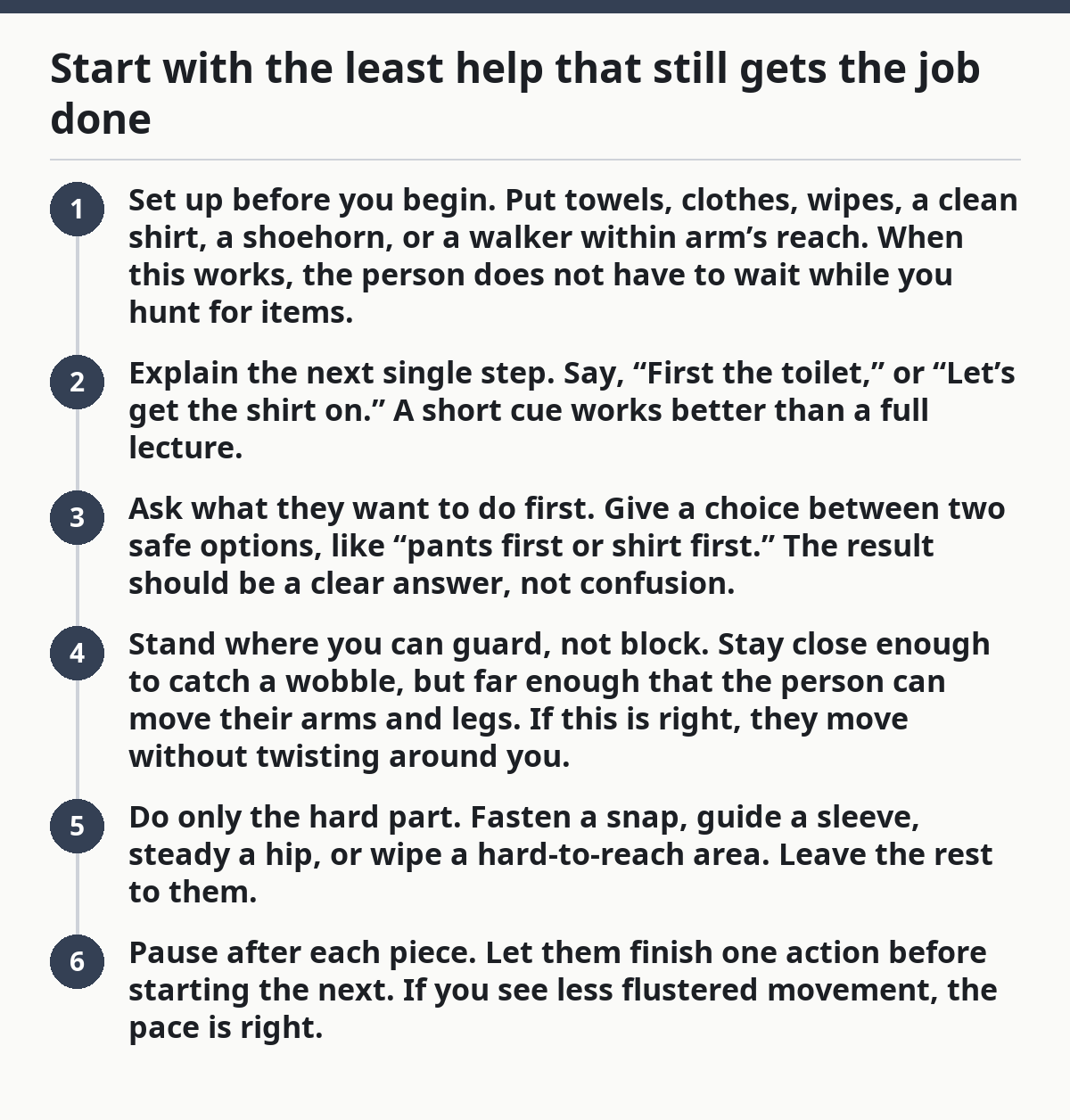
Start with the least help that still gets the job done
Picture this: you’re in a small bathroom, the shower is ready, clothes are laid out, and the person in front of you can stand but tires fast. The right move is one task at a time, with the least hands-on help needed.
Here’s the catch: if you jump in too early, you can make the person less steady, less confident, and more dependent. Start with a plan for the next 5 minutes, not the whole morning.
- Set up before you begin. Put towels, clothes, wipes, a clean shirt, a shoehorn, or a walker within arm’s reach. When this works, the person does not have to wait while you hunt for items.
- Explain the next single step. Say, “First the toilet,” or “Let’s get the shirt on.” A short cue works better than a full lecture.
- Ask what they want to do first. Give a choice between two safe options, like “pants first or shirt first.” The result should be a clear answer, not confusion.
- Stand where you can guard, not block. Stay close enough to catch a wobble, but far enough that the person can move their arms and legs. If this is right, they move without twisting around you.
- Do only the hard part. Fasten a snap, guide a sleeve, steady a hip, or wipe a hard-to-reach area. Leave the rest to them.
- Pause after each piece. Let them finish one action before starting the next. If you see less flustered movement, the pace is right.
This approach fits the reader who wants to help with toileting, dressing, and bathing without making every task feel like a transfer. It also fits the person who can still do part of the job but needs structure.
Key takeaways
- Prepare the space first so the person can keep moving.
- Use short cues, not a stream of instructions.
- Help with the hardest part only.
- Pause often; rushing is how dignity gets stripped away.
How do you help with toileting without hovering?
You help with toileting by keeping the path clear, giving privacy, and only stepping in for balance, clothing, or cleanup that the person cannot manage safely. A closed door, a walker positioned nearby, and a raised toilet seat or grab bars can make the difference between independent effort and a total takeover.
Picture this: you’re outside the bathroom door, hearing movement but not barging in. The person knows the routine, and your job is to keep it safe and unhurried. That means the bathroom is ready before the need becomes urgent.
- Clear the route first. Remove loose cords and other clutter from the path. A clear path lowers the chance of a stumble when the person is moving fast.
- Make clothing easy to manage. Use pants with an elastic waist, large buttons, or side openings if needed. When the clothing is easier, the person can toilet with less help.
- Offer privacy on arrival. Stay outside the door unless the person asks for help or needs guarding. If that works, the person does not have to perform in front of an audience.
- Stay ready for a stand-by assist. If balance is shaky, stand close enough to steady an elbow or waistband. The goal is support, not lifting.
- Help with the parts that strain joints. Fasten snaps, pull up briefs, or adjust clothing after washing hands. That keeps the task theirs while removing the hardest bits.
- Watch for a “finished” cue. A door opening, a call from inside, or hands washing at the sink usually means the step is done. Then move to the next task.
A generic article often misses the social side of toileting. The person may worry about odor, rushing, or embarrassment more than the mechanics. Quiet help and a predictable routine reduce that strain.
Two common mistakes cause trouble here. First, staying too long in the doorway can feel like surveillance. Second, doing all the clothing work for someone who can manage part of it can speed up decline. Use your hands only when the task truly calls for them.
The National Institute on Aging says bathroom safety matters because falls are common at home, and the bathroom is one of the highest-risk rooms. For that reason, a calm routine matters as much as the equipment. See the NIA’s bathroom safety guidance and the CDC’s fall prevention page for more on reducing risk.
What makes dressing easier without doing it for them?
Dressing is easier when you choose clothes that match the person’s movement, then guide them through one garment at a time. Adaptive clothing, front-opening tops, elastic waistbands, and Velcro closures cut the number of small hand movements that dressing demands.
Picture this: you’re standing by a bed or chair with two shirts in hand, one tight pullover and one open-front cardigan. The safer choice is the one that lets the person keep more control, not the one that looks neatest.
- Lay out the full outfit in order. Put underwear, pants, shirt, socks, and shoes where the person can see them. A visible sequence keeps the task from becoming a guessing game.
- Pick the easiest garment first. Start with the item that slides on most easily. If the person is tired, a shirt with front buttons may work better than a tight pullover.
- Use the body part that moves best. Dress the weaker arm or leg first, then remove clothing from the stronger side first when undressing. That usually reduces pulling and pain.
- Give one instruction at a time. “Put this arm through the sleeve” is enough. If the person completes that step, let them stop and breathe before the next one.
- Assist at the trouble spot only. You may need to open a cuff, lift a heel into a shoe, or pull fabric over a shoulder. Do not keep tugging once the item is in place.
- Check the finish, not the process. If the shirt hangs flat and the waistband sits comfortably, the job is done. A little wrinkle is not a failure.
Dressing gets faster when the person practices the same order every day. A set routine matters more than perfect clothing.
A long-handled shoehorn can help someone with a stiff back, and socks with wider openings can save a lot of bending. On the flip side, very loose clothes can drag on the floor or bunch around the feet, which creates a trip risk. Avoid garments with tiny buttons if hand strength is poor.
How do you bathe someone and still keep their dignity?
You bathe someone with dignity by preserving privacy, limiting exposure, and using the right tool for the job, such as a shower chair, grab bars, a non-slip mat, and a long-handled sponge. The goal is a clean body without a cold, rushed, full-body handoff.
Picture this: you’re in a bathroom with steam on the mirror, a chair inside the shower, and towels ready before the water starts. The person wants to wash up, not feel managed like a piece of furniture.
- Prepare the bathroom before undressing. Set towels within reach, test the water, and place the shower chair before the person steps in. A ready space cuts standing time.
- Keep the body covered in sections. Uncover one area at a time—shoulders, then arms, then torso. When this works, the person is not left exposed longer than needed.
- Use the chair for seated washing when balance is weak. A shower chair lets the person sit while washing feet, legs, and hair. Sitting should reduce fear and fatigue.
- Place a non-slip mat where feet land. The mat should stay flat, not curl at the edges. If it grips well, the person can step without hesitating.
- Let the person wash the easy areas first. Face, chest, and arms are often easier to manage than back or lower legs. You can step in for the hard-to-reach spots.
- Use the long-handled sponge for reach, not force. It helps with the back, lower legs, and feet without awkward twisting. That saves shoulder strain.
- Dry in sections and redress right away. Dry one area, cover it, then move on. If the person is warm and covered, the bathing experience feels less exposing.
A common mistake is treating bathing like a race. That can lead to missed skin folds, sloppy footing, and a feeling that the person is in the way. Slow is not lazy here. Slow is safer, and it is worth checking with a clinician if pain, dizziness, or shortness of breath makes bathing difficult.
The truth is, some people do better with a partial bath at the sink than a full shower. If standing is rough, seated washing and a basin can preserve energy without sacrificing cleanliness.
What should the bathroom and clothing be like before you start?
The bathroom and clothing should make movement simple, dry, and easy to reverse if needed. Small setup choices matter: grab bars at the tub or toilet, a chair that fits the shower, a non-slip mat, and clothes that open easily all reduce the amount of hands-on help you need to give.
Picture this: you’re already carrying towels, and the floor is dry because everything was placed before the person entered. That is the difference between a smooth routine and a scramble.
- Use stable handholds. Grab bars should be the thing the person reaches for, not towel racks or sink edges.
- Keep floors dry. Water on tile turns a short step into a slippery one.
- Choose shoes that stay on. Backless slippers slide off too easily during bathroom trips.
- Skip hard closures when possible. Buttons, laces, and tiny zippers slow everything down.
- Keep backup items nearby. Extra underwear, a spare shirt, and a dry towel prevent a full reset if a spill happens.
- Store items in the same place. Repetition reduces confusion and speeds up the routine.
Here’s the catch: good setup does not mean the older adult is fragile. It means the task is being shaped around their current ability. That’s the point of personal care assistance—support the person, not the fear around the task.
A generic guide often focuses on the caregiver’s convenience. That misses what matters most here: the person needs enough control to keep identity and habit intact. If clothing is arranged by the wrong side, or the towel is out of reach, the process starts with frustration.
For broader day-to-day support, this article links up with the hub on what a caregiver does day to day.
What do you do when the person starts doing less than they can?
You step back in stages, not all at once. The right handoff is gradual: let the person do what they still can, then fill in the exact gap, whether that is balance, reach, fasteners, or cleanup.
Picture this: you notice that the person can slide one arm into a sleeve but pauses at the second arm. That pause is your cue to help with just the second sleeve, not to finish the shirt.
- Watch where the slowdown starts. Is it standing, bending, lifting arms, or fastening clothing? The exact trouble spot tells you where to help.
- Give a pause before helping. Wait a few seconds after the person stops. Sometimes a short pause is all they need.
- Offer a cue before a hand. “Try the other arm” or “Hold the rail” can get the person moving again.
- Touch only what needs support. A hand at the elbow, waistband, or back may be enough.
- Take over only if safety drops. If the person is slipping, dizzy, or too tired to finish, finish the task quickly and calmly.
- Repeat the same routine next time. Familiar order builds skill and reduces resistance.
A real limitation here is that dignity can be lost fast if the helper keeps talking while moving the person’s body around. Quiet, precise help works better than a running commentary.
This is not the right approach for someone who is unsafe standing alone, too confused to follow one-step cues, or in pain with every movement. In those cases, more hands-on help may be needed.
How can you keep privacy during personal care?
You keep privacy by closing doors, covering the body in sections, and asking before touching the person’s clothes or skin. Privacy is not an extra. It is part of the care.
Picture this: you’re ready to help, but you pause before entering, knock, and wait for the answer. That small pause can change the whole tone of the task.
- Close the door or curtain before starting.
- Keep only the body part you are working on uncovered.
- Explain each touch before it happens.
- Use a towel or blanket to cover the lap, chest, or legs between steps.
- Step out for a minute if the person wants a moment alone.
The result should be simple: the person feels seen, not exposed. If that happens, they are more likely to accept help the next time.
What if the person refuses help with bathing?
You stop, ask why, and try a smaller step instead of forcing the issue. Refusal often means fear, cold water, pain, embarrassment, or feeling rushed.
Picture this: you have the shower ready, but the person says no and turns away. The fastest answer is not to argue. It is to find out what part feels bad.
- Offer a sponge bath instead of a full shower.
- Try later in the day when the person is less tired.
- Warm the room before starting.
- Offer choices like sink wash, shower chair, or hair-only washing.
- Keep your voice calm and short.
If refusal is new, extreme, or tied to confusion, pain, or a sudden change in behavior, a clinician should be contacted. A sudden shift can have a medical cause that needs attention.
How can you make dressing easier with limited mobility?
You make dressing easier by choosing adaptive clothing, dressing the weaker side first, and using seated positions whenever standing is hard. The goal is less bending, less pulling, and fewer steps that the person cannot finish alone.
Because the same routine works best, place the clothes in the order they will be worn and keep the steps short. That way, the person can see what comes next and stay involved.
- Choose pants with elastic waistbands or side openings.
- Pick shirts with front openings or larger armholes.
- Sit while putting on socks and shoes.
- Use a long-handled shoehorn if the back is stiff.
- Let the person do the easy part and take over only at the hard part.
For more help with daily routines, see the article on helping an older adult stay independent at home and the page on home fall prevention. In practice, dressing should feel predictable, not rushed, so the person can keep control of the parts they still manage.
The Occupational Therapy practice guidelines from the American Occupational Therapy Association support adapting tasks to the person’s abilities, and the National Institute on Aging recommends clothing choices and routines that reduce strain. Those are small changes, but they can save energy on every dressing task.
Drafted with AI; not yet reviewed by a person.