
How to build a morning caregiving routine that gets everyone moving

Last updated: November 19, 2026
Quick Answer: a morning caregiving routine can be built in 30 to 60 minutes by keeping the same tasks in the same order, with the same tools, every day. A chaotic morning with an older adult usually means missed pills, slow dressing, and a rushed breakfast. A good morning caregiving routine gets everyone moving by putting the same tasks in the same order, with the same tools, every day. The steps below show how to build that flow without turning the morning into a fight.
What a morning caregiving routine needs to do
A morning caregiving routine needs to move the day forward in 30 to 60 minutes without forcing anyone to guess what comes next. That means wake-up, toileting, hygiene, meds, breakfast, and mobility setup all have a place. It also means the routine matches the person’s real energy level, not the ideal one.
Picture this: you’re standing in a bedroom at 7 a.m., trying to help an older adult sit up, find glasses, and remember whether breakfast comes before pills. The answer is a fixed order, a simple setup, and a short list of next moves. Not a long checklist.
A routine like this works best when it does three things:
- Starts the day the same way each morning.
- Keeps items within arm’s reach before the first step.
- Leaves room for slow mornings without letting the whole day slide.
Here’s the catch: a routine is not the same as a schedule. A schedule tells you what time something should happen. A routine tells you what happens first, second, and third when the alarm, pain, fatigue, or confusion changes the pace. That difference matters in home care.
A useful routine also respects the person’s body. If the older adult uses a walker, needs a medication organizer, or eats a small breakfast before getting dressed, those details belong in the routine from day one. If the routine ignores them, it will fail by Wednesday.
The best starting point is a repeatable plan, not a perfect one. That means the same cup, the same chair, the same pill box, and the same route from bed to bathroom. Small details save a lot of time. For related setup steps, see the internal guide on caregiver routine and task management.
How do I build a morning caregiving routine that gets everyone moving?

You build it by mapping the morning in the order the body can follow it, then testing that order for 7 days and trimming out anything that slows it down. Start with the basics: wake-up, bathroom, hygiene, clothes, medications, food, and mobility gear. Keep each step short enough to finish before the next one starts to fray.
Picture this: you’re trying to help someone who moves slowly after waking, and every extra decision costs a minute. The routine has to reduce choices, not add them. A good one uses the same path, the same supplies, and the same sequence every morning.
Use this order:
- Wake the person and give a brief orientation. Say the day, the time, and the next step in one sentence.
- Help with toileting or the bathroom first if needed. This lowers the chance of an interruption later.
- Handle hygiene while the person is already up and near water. Keep soap, toothbrush, washcloth, and towel in one spot.
- Put on clothes before breakfast if dressing takes effort. Lay out items the night before in the same order.
- Give medications from the medication organizer at the right point in the routine, based on the label or care plan.
- Serve breakfast and water in the same place each day.
- Set up the walker, glasses, hearing aids, shoes, or other gear before the person stands again.
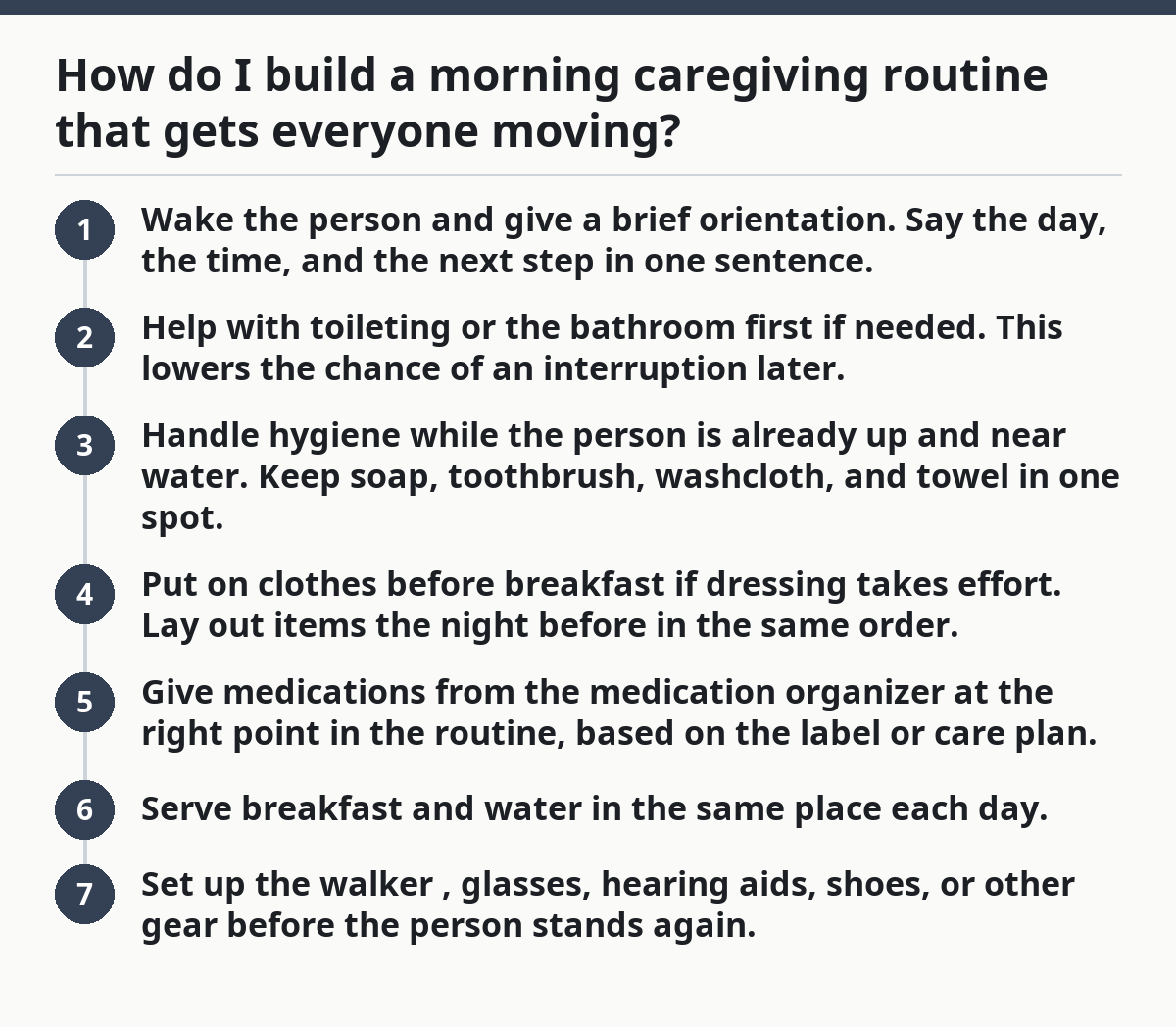
The order above is not fancy. It works because it cuts backtracking. If the bathroom trip comes after breakfast, you may end up with a half-finished meal and a confused person standing with a spoon. If clothes are tucked away in different rooms, the morning stretches fast.
However, you do not have to lock the sequence forever. If bathing first makes the person tired, move it later. If medication must be taken before food, keep that step fixed. A routine should bend without breaking. For more on home-day structure, the internal guide on daily caregiving tasks can help.
What should happen first in a caregiving morning routine?
The first thing should be the task that prevents the biggest morning snag, usually bathroom use, pain relief, or orientation. After that, the routine should move into hygiene and dressing before breakfast, unless the care plan says medication must come before food. That first step sets the tone for the rest of the morning.
Picture this: you’re in the doorway and the person is still half asleep, asking the same question twice. The first move should be simple and physical, not complicated and conversational. One clear task gets the body started.
A strong first step often looks like this:
- Open curtains or lights so the room feels like morning.
- Say the date, time, and next step in plain words.
- Check for urgency: bathroom, pain, thirst, or a need to stand slowly.
- Bring needed items to the bedside instead of sending the person hunting for them.
If the person has dizziness, stiffness, or a slow start, the first 10 minutes should be calm and predictable. Rushing here creates the mess that lasts all morning. The same is true if the older adult has memory trouble. Short instructions beat long ones. The National Institute on Aging recommends keeping directions simple and clear for older adults, especially when memory or mobility is involved.
The trick is to keep the opening step from turning into three jobs. “Let’s get up” is not enough. “Let’s sit up, use the bathroom, and wash your face” is better because it breaks the motion into visible chunks. One direction at a time.
Avoid starting with breakfast if the person still needs a bathroom trip or a med that must be taken first. That shortcut often creates a stop-and-start morning. It also means dishes, crumbs, and half-finished food sitting around while the person tries to stand.
What do I set up the night before?

You set up the night before by putting every morning item in one known place, with no searching after wake-up. The setup should take 5 to 10 minutes in the evening and save much more time in the morning. That prep is what keeps the routine from collapsing when the morning is slow.
Picture this: you’re looking at a chair, a dresser, and a kitchen counter, and every one of them holds part of the morning. That is how people lose time before they even start. A better setup keeps the morning inside one small zone.
Set out these items before bed:
- Clothes in wearing order.
- Medication organizer on a clear counter, away from heat and moisture.
- Water glass and breakfast items that do not need much prep.
- Shoes, socks, and any brace or walker attachment.
- Toothbrush, cleanser, towel, comb, and tissues.
Use one basket or tray if the room keeps collecting clutter. A tray works better than a pile because it shows what belongs and what does not. If the person uses hearing aids, denture supplies, or incontinence items, those need a fixed home too.
The truth is, the night-before setup matters more than the morning pep talk. If the toothbrush is missing, the morning starts in frustration. If the clothes are already matched, you save decision-making for when both of you are tired.
There’s also a safety point here. Keep the floor clear of cords, loose rugs, and slippers that slide. If the person needs a walker, make sure the path from bed to bathroom is wide enough for it to move without bumping into furniture. A clean path is part of the routine, not an extra. For home safety basics, see the internal guide on fall prevention at home.
How do medications and breakfast fit into the routine?
Medications and breakfast fit best when the medication timing follows the label or care plan and breakfast happens in the same place every day. The routine should not force a guess about food, water, or timing. If the medication label says to take it with food, breakfast comes first. If it says empty stomach, breakfast waits.
Picture this: you’re at the kitchen table, the pill box is open, and the older adult wants toast right away. The order matters, but the order should be clear before the morning starts. That keeps the moment from turning into a debate.
Use this rule set:
- Keep the medication organizer visible but out of the way.
- Give pills with water, not just coffee or juice, unless the label allows it.
- Match breakfast to the person’s appetite, chewing needs, and energy.
- Put utensils, napkins, and anything spill-prone on the same side of the table each day.
If the person eats slowly, build in 15 minutes for breakfast instead of hovering and rushing. If swallowing is a concern, follow the care plan and stop if the person coughs, chokes, or seems unable to manage food safely. That is a moment for medical guidance, not guesswork. For medication timing and swallowing concerns, the NHS advises following the prescribed directions and seeking clinical advice when swallowing is difficult.
Breakfast should be simple enough to repeat. Oatmeal, eggs, yogurt, toast, or fruit are easier to manage than a big spread with too many choices. Too much choice slows the morning down and can make an older adult refuse to start.
A common mistake is serving breakfast before the person is fully awake. That leads to wandering attention, cold food, and a longer cleanup. Another mistake is hiding medication among food without a clear plan. That can cause missed doses and confusion later in the day.
How do I keep mornings on track at home?
You keep mornings on track by using the same cues, the same space, and the same backup plan when something changes. The routine should stay stable even if the person sleeps late, feels stiff, or has a rough night. A routine that breaks at the first delay is not a routine yet.
Picture this: you’re halfway through the morning, and one small delay has pushed everything else back. The answer is not to speed up. It is to drop anything extra and return to the next task in order. That keeps the day from sliding sideways.
Use these anchors:
- A visible clock or timer in the bedroom or kitchen.
- One spoken cue for each step, not a list of three.
- The same chair for dressing or breakfast.
- A backup list for the two things that matter most: meds and mobility.
If the older adult resists a step, pause and move to the next calm action. Try water, a seat, or a shorter instruction. Long explanations usually make mornings worse. Short directions are easier to follow when someone is tired or confused.
This is also where routine changes belong. If winter clothes take longer, start them earlier. If the walker needs to be moved closer to the bed, change that tonight, not after tomorrow’s slip. Small changes keep the routine alive. For practical caregiver planning, the internal guide on morning caregiving tasks fits here.
For broader task flow, the hub on caregiver routine and task management can sit alongside this morning setup. The point here is different: this page is about the start of the day, not the whole day.
Key Takeaways
- A morning caregiving routine works when it uses the same order every day.
- Keep the first steps short: wake up, bathroom, hygiene, clothes, meds, food, mobility.
- Night-before setup saves the most time in the morning.
- Put the medication organizer, walker, and breakfast supplies where you can reach them fast.
- If the routine keeps breaking, simplify it instead of adding more steps.
Common mistakes that slow the whole morning
The biggest mistakes are making the morning too complicated, putting supplies in too many places, and changing the order every day. Each one costs time, raises stress, and makes the older adult less willing to move. Simpler usually works better than stricter.
Picture this: you’re trying to keep a calm tone, but you’re also searching for socks, pills, and a clean towel. That is not a people problem. It is a setup problem. Fix the setup, and the tone improves fast.
Watch for these traps:
- Too many choices. Three shirt options can stall a tired person for 5 minutes or more.
- Mixed signals. Asking the person to sit, stand, eat, and wash up all at once makes the first move harder.
- Hidden supplies. A good routine fails if the glasses, pills, or washcloth keep moving.
- Skipping the same order. A different sequence every day forces the person to re-learn the morning.
The cost of these mistakes is not just time. It can mean missed medication, a skipped breakfast, or a person who gets up too fast and feels unsteady. The fix is simple: cut the number of decisions, shorten the directions, and keep supplies in the same place.
If mornings still feel rough after you simplify, do not add more tasks. Remove one. Drop anything that is not needed before lunch. The morning routine should help the person get moving, not prove how much can be packed into an hour.
What should happen first in a caregiving morning routine?
The first step should be the one that clears the biggest morning blocker, usually the bathroom, orientation, or a needed medication step. The routine should then move in the same order every day so the person does not have to guess. If the first step changes every morning, the rest of the routine tends to wobble too.
How do I make mornings less stressful for caregiving?
Mornings feel less stressful when the order is fixed and the supplies are already waiting. Keep the voice calm, the instructions short, and the path to the bathroom and kitchen clear. A 5-minute night-before setup often does more than a longer morning lecture.
How do I keep mornings on track at home?
Keep mornings on track by using the same room, the same order, and one cue for each task. A clock, a pill box, and a clear walkway can prevent most delays. If something changes, adjust the setup at night rather than rebuilding the whole morning in the moment.
Drafted with AI; not yet reviewed by a person.