How to prepare the home for the first visit from a paid caregiver

Last updated: November 19, 2026
Quick Answer: the first visit from a paid caregiver goes better when the home is ready, the supplies are easy to find, and the day’s rules are written down. The steps below show what to set out, what to write down, and what to leave alone when you are learning how to prepare the home for the first visit from a paid caregiver.
What the first visit needs most
The first visit from a paid caregiver needs access, supplies, and a short written guide. If those three things are ready, the caregiver can spend the visit helping the person at home instead of hunting for towels, meds, or a phone number.
Because you are preparing the home for the first visit from a paid caregiver, picture this: you’re trying to get the house ready while answering texts, opening drawers, and wondering whether the caregiver will know where to start. A clean setup removes that scramble. It also cuts down on awkward guesswork during the first 30 minutes.
In short: make the home easy to enter, easy to move through, and easy to understand.
- Clear the entry path.
- Gather care supplies in one spot.
- Write down house rules and contacts.
- Leave simple notes for day one.
A generic checklist misses the point here: the first visit is not about making the house look perfect. It is about making it usable. A caregiver does not need polished rooms; they need the shower chair, gloves, wipes, and emergency contacts in the place you said they would be.
If the home is small, shared, or crowded, that matters even more. A bedside table with one labeled basket beats three half-empty cabinets. A short note beats a long speech. A room that lets a wheelchair or walker pass without a 180-degree turn saves time and stress.
How do I set up entry instructions and access?
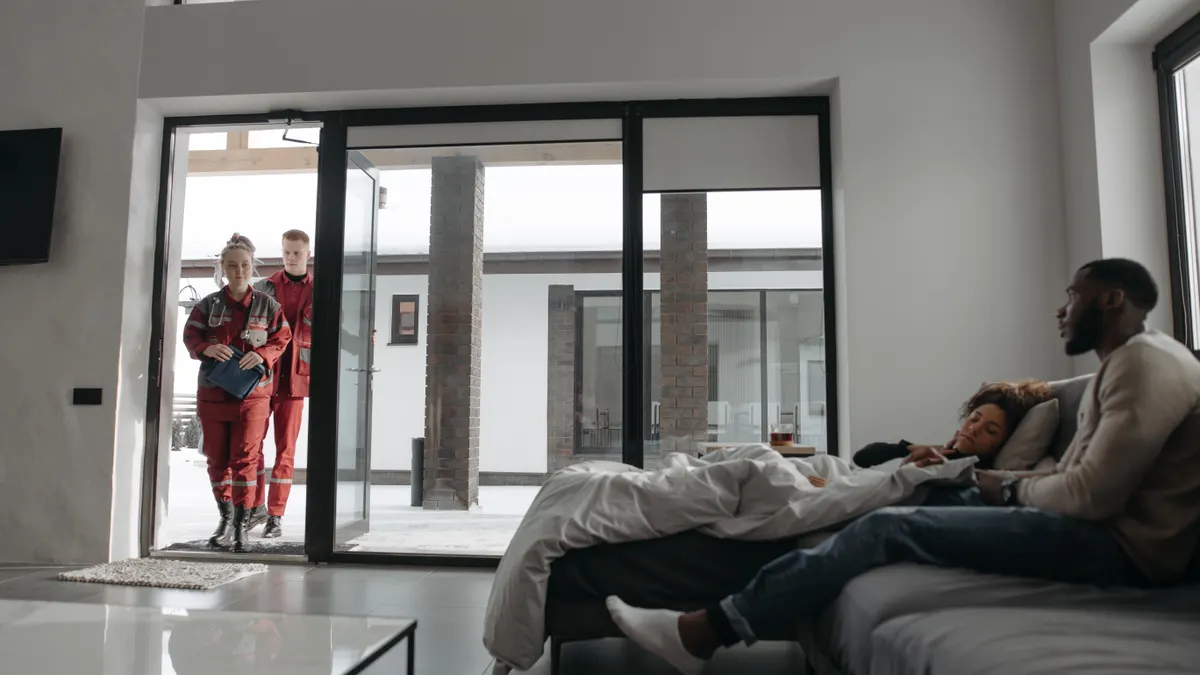
You set up entry instructions by making the first 5 minutes of arrival simple: tell the caregiver how to get in, where to park, and what to do if nobody answers the door. That keeps the visit from starting with a phone chain and a locked gate.
Because the home for the first visit from a paid caregiver should be easy to enter, picture this: you’re in another room or out running an errand, and the caregiver arrives at the door with no code, no note, and no idea which entrance to use. That delay can throw off the whole visit. A written access plan fixes that before anyone arrives.
- Write the door code, key location, or lockbox code on a note kept in a safe place.
- Place a spare key, if you use one, in the agreed spot before the visit.
- Mark the correct door, driveway, or building entrance with a clear sign or message.
- List the parking spot, gate code, or buzzer name if the home uses one.
- State what to do if the caregiver cannot get inside after a short wait.
Keep the note plain. “Front door code is 2481. Use the side ramp. Park in the driveway. If no answer after 10 minutes, call the main contact.” That is enough. Long explanations slow people down.
The catch is security. Do not leave a key under a mat or a code on the front hall table if other people come and go. Use the lockbox, note, or contact method your household already trusts. If the caregiver service gave you a standard intake form, copy the access details there too so nothing sits only on one scrap of paper.
What should I clean and clear before the caregiver arrives?
You should clear the routes, the bathroom, and the main care area before the caregiver arrives, because those are the places where clutter gets in the way fast. A 10-minute cleanup in the right rooms helps more than a whole-house deep clean.
Since the home for the first visit from a paid caregiver needs to function, picture this: you’re looking at a kitchen counter full of mail, a hallway with shoes, and a bathroom with nowhere to set a towel. A caregiver can still work in a home like that, but every extra obstacle costs time and attention. Clear paths make transfers, bathing, and routine tasks easier.
- Remove loose rugs that slide.
- Pick up cords from walk paths.
- Move low furniture that blocks a walker or wheelchair.
- Clear one flat surface for supplies.
- Put pets in another room if they get underfoot.
The bathroom deserves special attention. Leave soap, washcloths, clean towels, toilet paper, and any approved hygiene supplies within reach. If the caregiver is helping with a shower or sponge bath, a dry floor matters more than a spotless sink.
Do not hide the things that are actually needed. A tidy room can still be hard to use if the gloves are in one closet, the wipes are in another, and the extra linens are in the garage. A single basket or bin works better than a clean room with no clear system.
The truth is, the home does not need to look staged. It needs to function. If a room is cramped, say so in the orientation note. If a drawer sticks, say that too. A caregiver can work around a small space far better than around surprises.
Where should I keep care supplies and paperwork?

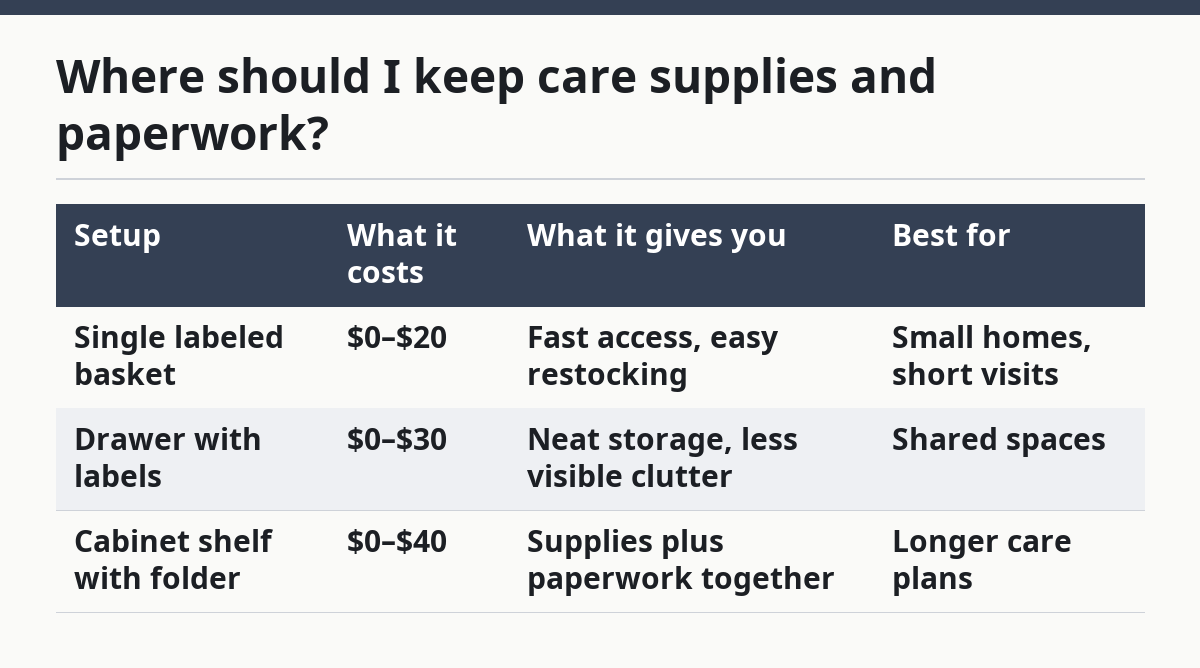
You should keep care supplies and paperwork in one labeled spot, because the first visit goes smoother when the caregiver does not have to search room by room. One basket, bin, or cabinet shelf is enough if it is clearly marked.
Because the home for the first visit from a paid caregiver should be easy to understand, picture this: you’re setting out gloves, wipes, lotion, a thermometer, and extra briefs, but each item ends up in a different place because that is where it “usually goes.” That setup feels normal to the family and confusing to the caregiver. A single supply zone fixes it.
| Setup | What it costs | What it gives you | Best for |
|---|---|---|---|
| Single labeled basket | $0–$20 | Fast access, easy restocking | Small homes, short visits |
| Drawer with labels | $0–$30 | Neat storage, less visible clutter | Shared spaces |
| Cabinet shelf with folder | $0–$40 | Supplies plus paperwork together | Longer care plans |
- Use a basket, drawer, or shelf near the main care area.
- Label it with plain words, not codes.
- Put the most used items at the front.
- Keep refill items behind or below the daily stock.
- Store paperwork in a separate folder nearby.
The paperwork set should be small and current. Include the care schedule, the orientation notes, medication lists if the caregiver is expected to help with reminders, and a sheet with key contacts. If the caregiver service gave you a form, keep that with the folder too.
A common mistake is to leave the supplies in the bathroom but the paperwork in the kitchen and the phone numbers on a sticky note in a bedroom. That split wastes time. It also makes the first visit feel disorganized even when the care itself is fine.
A better setup is simple: one supply bin, one paper folder, one phone list. If the caregiver is new to the home but not new to the work, this is the map they need.
What house rules belong in the orientation notes?
House rules belong in the orientation notes if they affect privacy, safety, food, pets, visitors, or routines. A short note written in bullet points is better than a long letter nobody reads during a busy first visit.
Because the home for the first visit from a paid caregiver runs on household habits, picture this: you know the household habits by heart, but the caregiver only sees what is written or said at the door. If the dog is jumpy, the alarm is loud, or the client naps after lunch, those details need to be on the page.
Use the notes to cover the basics:
- Preferred name and pronunciation
- Quiet hours and nap times
- Food rules, allergies, and drink limits
- Pet rules and where pets stay
- Smoking rules, if any
- Visitor limits
- Which rooms are private
- What tasks are okay and what tasks are not
The note should also say what counts as an emergency contact. If the caregiver should call one person first and another person second, say that in order. A simple structure keeps the day from turning into a guessing game.
Do not turn house rules into a list of complaints. “Do not touch the blue cabinet” is useful. “We hate clutter” is not. The more concrete the rule, the faster the caregiver can follow it. A rule about the thermostat, for example, helps more than a vague warning about “keeping things comfortable.”
If the home has special equipment, include that too: grab bars, a hospital bed, a shower chair, a lift, or a walker parked in a certain corner. Those are not side details. They shape the work.
What should be ready for the first day?
You should have the first day mapped out in plain language, because the caregiver needs to know what happens first, what happens next, and what a normal day looks like in this home. A written day-one plan avoids the blank stare that happens when everybody assumes the other person will lead.
Because the home for the first visit from a paid caregiver works best with a clear start, picture this: the caregiver walks in, and the household has five things in mind at once—meds, breakfast, a bath, laundry, and a doctor call. Without a plan, the visit can start with confusion instead of care. A short sequence keeps it steady.
- List the top task for the visit.
- Add the second task only if time allows.
- Name the rest periods, meal times, and usual bathroom breaks.
- Note any tools the caregiver will use.
- Write the time the visit is expected to end.
If the caregiver is coming at a set time, have the room ready 15 minutes early. That leaves a margin for parking, badge checks, or a short introduction. If family members will be present, decide ahead of time who speaks first so the room does not fill with competing instructions.
The best part? A clear first-day plan does not need to be fancy. It can fit on one page. It should say what matters, not everything you can think of. The goal is to make the home easy to enter and the day easy to start.
What mistakes make the first visit harder?
The biggest mistakes are hiding supplies, skipping contact names, and trying to explain the whole house at the door. Those errors cost time, cause confusion, and make the caregiver work harder on a day that already has enough moving parts.
Because the home for the first visit from a paid caregiver should prevent friction, picture this: you’ve done a quick tidy-up, but the gloves are in one bathroom, the extra towels are in a hall closet, and the medication list is on someone’s phone that is now dead. The visit starts with a search party. That is the kind of friction that a little prep can prevent. If the care plan involves medication or safety concerns, confirm the instructions with the care agency or a licensed professional.
- No clear place for supplies
- No written access instructions
- Too many people giving directions
- Missing phone numbers
- No note about pets, alarms, or stairs
- A day-one plan that lives only in memory
The fix is boring, and that is the point. One person should write the orientation note. One person should check the supply bin. One person should make sure the door code works. When three people do the same task, important details slip.
Another mistake is making the caregiver guess what “help” means. If you want the visitor to focus on light tasks, say that. If the home has a steep step, a narrow bathroom, or a locked room, say that too. A first visit goes better when the notes match the house.
A generic “here’s the place” tour is not enough. The home needs a working setup, not a welcome speech.
What should I do after the first visit starts?
You should stay available for the first few minutes, then step back and let the routine settle. That gives the caregiver room to work while still leaving a path for quick questions.
Because the home for the first visit from a paid caregiver is already set up, picture this: the caregiver has found the supplies, the door code worked, and the first task is underway. Now the useful move is not to hover. It is to stay reachable, answer one or two questions, and let the visit build a rhythm.
- Keep your phone on.
- Answer only the needed questions.
- Correct missing details early.
- Save longer changes for the next visit.
- Note what the caregiver asked for.
After the visit, make a short list of what was missing. Maybe the wipes ran out, the note forgot the backup contact, or the towel shelf was in the wrong place. Fixing those small problems before the next visit pays off fast.
This page is part of the larger guide to choosing care services and paid help, but the task here is narrower: make the home ready for the first arrival. That means the entry works, the supplies are visible, and the day has a written shape.
Key Takeaways
- The first visit goes best when the caregiver can enter, find supplies, and start work without a search.
- One labeled supply spot beats scattered drawers and half-finished explanations.
- Written access details matter more than a quick verbal rundown.
- House rules work only when they are concrete and short.
- A simple day-one note keeps the visit from turning into guesswork.
What should I tell a caregiver on the first day?
Tell the caregiver where to enter, where supplies are kept, what the main routine is, and who to call if something changes. Keep it short and direct. A first-day note should cover access, privacy, meals, pets, and any task that needs special handling, such as a shower setup or a mobility aid.
How do I show an aide where things are kept?
Show the aide one supply spot, then leave a labeled note or basket list there. Point out the most used items first, like gloves, wipes, towels, and paperwork. If the home has a second location for backups, say that next. A single map is easier to use than a tour of every cabinet.
What paperwork should be ready for the first visit?
Have a contact sheet, the care schedule, the orientation notes, and any forms the caregiver service gave you. If medication reminders, allergies, or special routines matter, include those too. Keep everything in one folder near the supply area so the caregiver can find it without asking three different people.
Drafted with AI; not yet reviewed by a person.