Last updated: November 19, 2026
Key Takeaways
- Keep daily-use items in the room and store the rest in labeled bins away from the main route.
- Give a walker or wheelchair one parked spot that stays clear of the walking line and door swing.
- Arrange furniture to create wider turns, open reach zones, and fewer sharp edges near the path.
- Use one labeled supply system with three levels: daily, weekly, and backup.
Small caregiving space gets unsafe fast when a walker, wheelchair, bedside table, and supplies all land in the same path. How to keep a home clear and safe when caregiving space is limited starts with clearing the walking line, giving each item a fixed home, and resetting the room every day. The steps below show what to move, where to store it, and how to keep shared rooms usable.
Start with the one route that must stay open
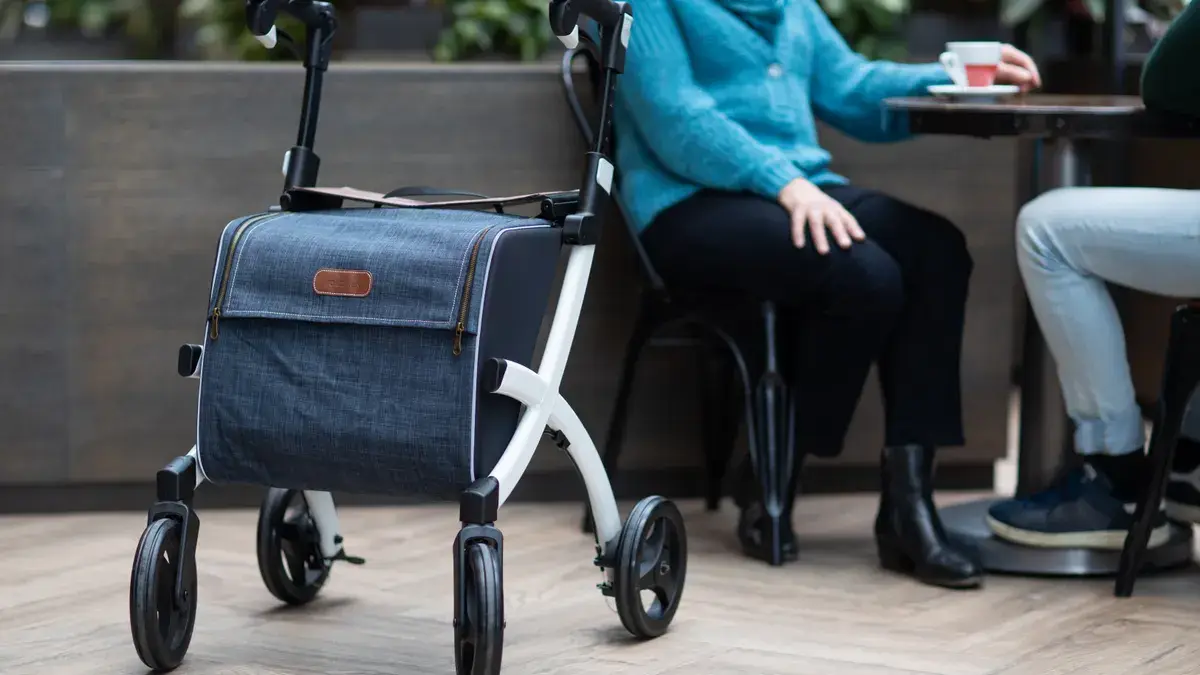
Picture this: you’re trying to get from bed to the door with a walker, and a storage bin sits six inches off the baseboard. That small obstacle can turn a normal turn into a catch, trip, or scrape. A better first move is to protect the main path before you try to clean the whole room at once.
The main route should be 36 inches wide when space allows, because that is the width many accessibility guides use for a clear path. If you cannot reach that in a small apartment, keep the route as straight as possible and remove anything that sticks out more than a few inches. The goal is simple: no hooks, no loose cords, no low boxes.
- Stand at the bed or chair and trace the route to the door, bathroom, and kitchen.
- Pull out everything that narrows the path: hamper, trash can, floor fan, extra chair, loose slippers, and charging cords.
- Park only one mobility aid in that route at a time, never both a walker and a wheelchair side by side.
- Leave a flat turning spot at each end of the path so the person can pivot without backing into furniture.
- Mark the route with tape for a day if the household keeps drifting items back into it.
That route is the spine of the room. If it stays open, the rest gets easier.
- A straight path beats a scenic one.
- Floor clutter near the bed is the first thing to go.
- Turning space matters almost as much as width.
For shared rooms, this is where a home health aide can help keep the path reset at the same time each visit, which can reduce the chance that one person has to remember every loose item alone. A home health aide may also follow the plan in CDC falls prevention guidance or an occupational therapist’s advice for the room.
How do I keep a home clear and safe when caregiving space is limited?
Keep only the items used daily in the room, and put the rest in labeled storage outside the main path. That is the core rule for small-space caregiving safety, because clutter grows when every item tries to live beside the bed or chair.
Picture this: you have a bedside table, a storage bin, oxygen tubing, medications, and a blanket all fighting for the same two feet of space. The room looks organized for a minute, then the first reach knocks something to the floor. The fix is to assign each category a place that fits how often it gets used.
Use this order:
- Put the bedside table within easy reach, but keep the top to the items needed in the next 12 hours only.
- Move spare bedding, extra toiletries, and backup supplies into one storage bin with a lid.
- Keep heavy items low and light items high so no one has to lift awkwardly over shoulder level.
- Store emergency supplies in one known spot, not in three half-empty drawers.
- Empty one “miscellaneous” pile every day before it becomes a tripping pile.
A bedside table works well when it is boring. Not elegant. Useful. If the top holds a lamp, water, glasses, phone, and one care item, it does its job. If it also holds mail, chargers, snacks, and three unfinished tasks, it becomes part of the problem.
What to keep near the person:
- Water, glasses, tissues, and one charger
- The current walker or cane if it is used often
- A lamp with a switch that is easy to reach
- One small container for current-day supplies
What to move out:
- Extra chairs
- Duplicate pillows and blankets
- Boxes, gift bags, and paper piles
- Anything stored on the floor
The truth is, clutter control is less about tidying and more about deciding what deserves floor space. The floor is not storage. It is travel space.
Where should a walker or wheelchair go in a cramped room?
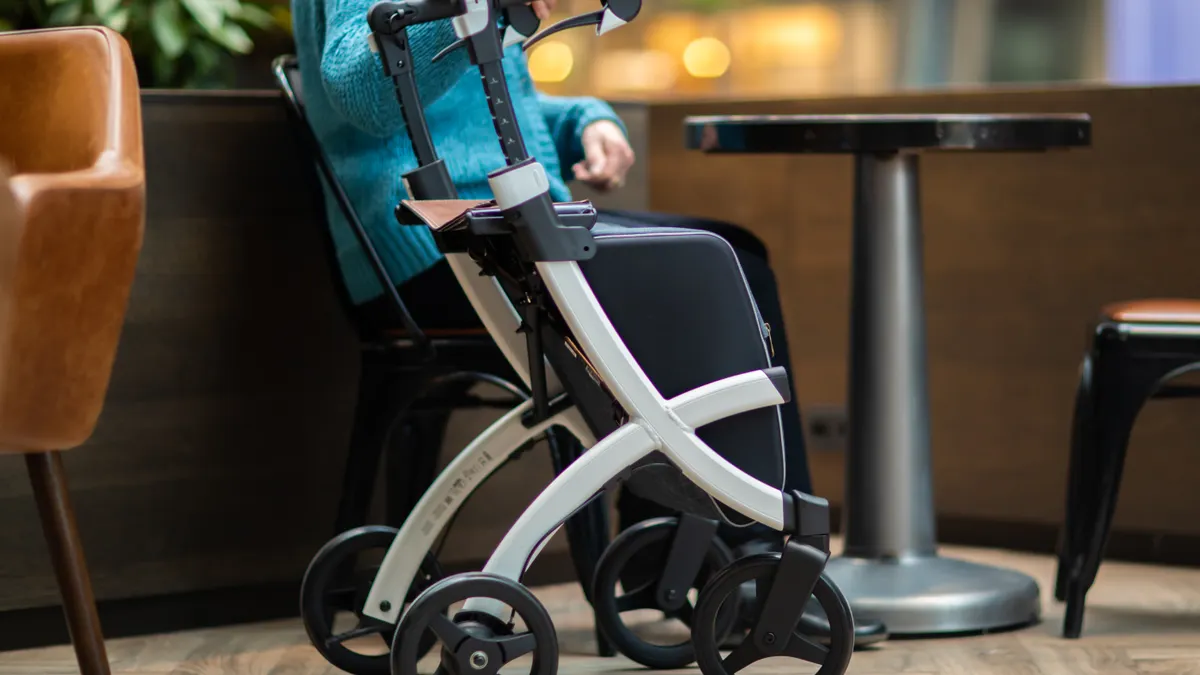
A walker or wheelchair should have one parked spot that stays out of the walking line and out of the door swing. That keeps the device ready without turning it into a hidden obstacle.
Picture this: you’re trying to reach a wheelchair at night, and it’s wedged beside the bed with one wheel half-turned. That setup looks neat until morning, when the wheel catches the leg of a table or blocks the first step out. A parked device needs clear approach space and clear exit space.
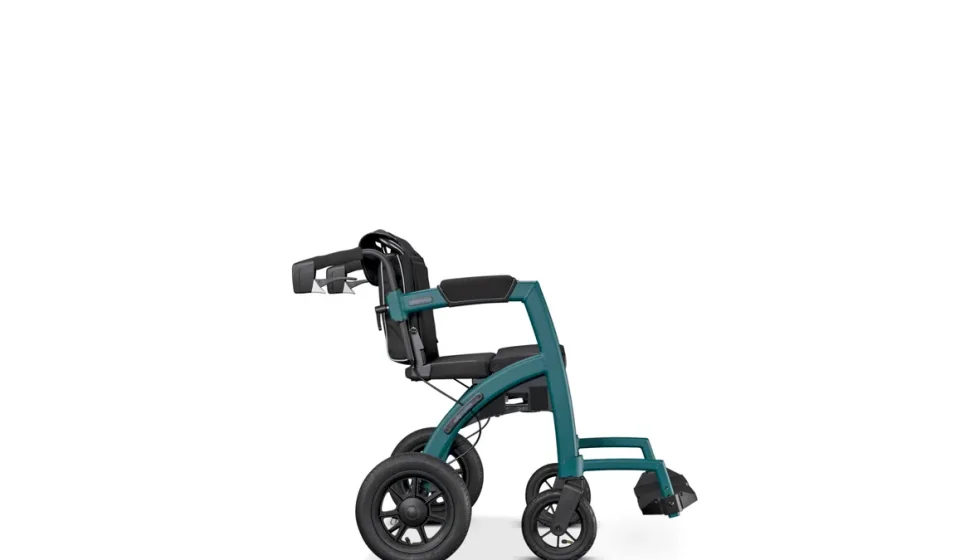
For a walker, fold it only if the person can unfold it without twisting or reaching across furniture. For a wheelchair, keep the brakes easy to reach and leave enough space to pull it straight out. If the room is tight, angle the device so it does not jut into the route like a corner of a box.
Simple rules help:
- Do not tuck a walker behind a door.
- Do not store a wheelchair where the footrests clip a wall.
- Do not park either device beside a loose rug.
- Do not let a charging cable run under the wheels.
A storage bin can help here, but only for accessories: cushions, wipes, spare socks, and similar items. The bin should not become the place where the device itself disappears. If the person uses a wheelchair every day, the chair needs a stable home more than a decorative one.
A fixed parking spot can also make the room easier for everyone else to clean. One spot. One habit. Less chaos.
What furniture placement makes a small caregiving room safer?
Furniture placement makes the room safer when it creates wide turns, clear reach zones, and fewer sharp edges near the path. You do not need more furniture. You need smarter placement of the pieces already there.
Picture this: the room has a bed, a chair, a dresser, and a bedside table, but the chair blocks the drawers and the dresser blocks the light switch. That setup forces sideways walking, twisting, and extra steps. In a cramped room, every extra step is a chance to catch a foot or bump a hip.
Use these placement rules:
- Keep the bedside table on the side the person uses most.
- Push the bed far enough from the wall to allow sheets to be changed without climbing over the frame.
- Place a chair where it supports transfers, not where it narrows the route.
- Keep sharp corners away from the most used turn.
- If a dresser can move out of the room, move it.
A useful chair has a firm seat, arms the person can grip, and enough room around it for safe standing. A bad chair choice in a tight room is one with wheels that drift, arms that pinch, or a low seat that makes standing harder.
Avoid these placement mistakes:
- Chair backs facing the main route
- Tables at shin height in dark corners
- Furniture that forces a sidestep to reach the bed
- Boxes under the chair or bed that become toe traps
The truth is, a small room cannot afford decorative placement. Every item has to earn its footprint.
How do I store care equipment without crowding the room?
Store care equipment in one labeled system with three levels: daily, weekly, and backup. That keeps the room from filling up with duplicate items that get in the way of the actual care.
Picture this: you have wipes, gloves, pads, pill boxes, linens, and two types of tape scattered across a drawer, a closet shelf, and the top of a dresser. None of it looks like clutter on its own, but together it eats the room. The answer is to sort by use, then store by reach.
A simple system:
- Daily items go in the bedside table or one small bin.
- Weekly items go in a closet shelf or tote outside the main route.
- Backup items go in a higher cabinet or another room if possible.
Label the bins plainly: “day,” “week,” and “spare.” That is enough. Fancy labels do not make the room safer. Consistent labels do.
Keep the lightest supplies in the top layers and the heaviest items low. A storage bin should open without lifting it over a pile. If a box must be dragged across the floor to reach something, it is in the wrong place. Store tubes and cords coiled loosely, not knotted tight.
A home health aide often helps with this part by keeping the same bin in the same place after each visit. That can reduce the daily search for supplies and may help prevent the room from being rearranged by accident; a professional can confirm the best layout for the room. For safe setup, the National Institute on Aging and MedlinePlus both recommend reducing clutter and keeping walkways clear.
If the room has no closet, use one lidded bin under the bed only if it slides cleanly and does not block feet. Skip under-bed storage if it becomes a catch point for socks, wires, or dust.
What daily reset routine keeps the space from sliding back?
A 5-minute reset keeps the space usable far better than one big clean-up once a week. The room stays safer when the same small jobs happen at the same time each day.
Picture this: the room looks fine at noon, then by evening there’s a blanket on the chair, a charger on the floor, and a cup on the wrong side of the bed. That is normal. The fix is not perfection. It is a reset that catches drift before it spreads.
Use this routine:
- Put every item back in its home.
- Clear the floor around the bed, chair, and doorway.
- Refill the bedside table with only what is needed tonight.
- Coil cords and place them where no wheel or foot can reach them.
- Check that the walker or wheelchair is parked in the same spot every night.
Do the same reset after visitors leave. Visitors mean cups, bags, shoes, and extra chairs. If the room supports caregiving, it has to recover fast.
A timer helps. Five minutes is enough for a small room if the storage system is already set. Ten minutes is fine after a rough day or a supply refill. The point is speed with a purpose, not a deep clean.
One rule helps most: if something is not used before the next meal or sleep period, it should leave the path.
What mistakes make a small caregiving space unsafe?
The biggest mistakes are using the floor as storage, letting equipment float from place to place, and cramming the room until no one can turn safely. Those habits cost time first, then balance, then peace of mind.
Picture this: a room looks tidy because everything is stacked neatly against the wall. Then a person needs to turn with a walker, and the neat stack turns into a narrow pinch point. Clean-looking clutter is still clutter.
Common mistakes and the fix:
- Floor bins in the route — they become toe traps. Move them to a shelf or closet.
- Too many chairs — they shrink the walking line. Keep only one support chair in the room.
- Cords across the floor — they catch walkers and feet. Route them along a wall.
- Supplies in three places — they waste time and create duplicate piles. Consolidate into one system.
- Furniture that blocks reach — it forces unsafe twisting. Reposition or remove it.
Here’s the catch: some clutter is emotional, not practical. People keep boxes, gifts, or “just in case” items because the room feels less empty that way. In a caregiving room, empty floor space is not wasted. It is safety space.
If the household keeps arguing about what stays, set one limit: anything that blocks the route or the chair gets moved first. Sentimental items can wait. Feet cannot.
For broader home-care planning, this page sits under the larger home caregiving safety hub, which handles the wider safety picture without repeating the room-by-room inspection.
FAQ
How do I make caregiving work in a small apartment?
Make the apartment work by assigning one clear path, one parking spot for equipment, and one daily reset. Small spaces can get easier when the same route stays open and the same supplies return to the same place. A 5-minute reset at the end of the day keeps the room from collapsing into clutter.
What should be moved out of the way at home for safety?
Move anything that narrows the walking line, blocks the door, or sits low enough to catch feet or wheels. That includes extra chairs, floor bins, loose cords, bags, and duplicate supplies. Keep the path from bed to door as straight as possible, and leave turning space at each end.
How do I store care equipment without crowding the room?
Store only daily items in the room and move the rest into labeled bins outside the main path. A bedside table should hold current-use items, not backups. If the room has no closet, use one lidded storage bin for supplies and keep it off the walking route.
Drafted with AI; not yet reviewed by a person.