Last updated: November 19, 2026
Key Takeaways
- A safer overnight caregiving setup gives the caregiver a real sleep space, clear night movement, and quick access to help.
- Set it up like a small bedroom, not a storage room.
- The sleeping space should feel private enough for rest and easy to enter at night.
- The caregiver should reach a light, phone, water, and call method without leaving bed in the dark.
If you have an overnight caregiver sleeping over, the home should give them a quiet, lit, reachable, and private place to sleep, plus clear night access to the bathroom, phone, and emergency instructions. This guide shows how to set up the room, paths, lights, and paper that make how to make a home safer for a caregiver who sleeps over safer. For context, the CDC reports that 1 in 4 adults age 65 and older falls each year, so night access matters.
What a safe overnight caregiving setup needs
A safe overnight caregiving setup gives the caregiver a real place to sleep, a clear way to move at night, and fast access to the right help if something changes. It does not have to be fancy, and it does need to be deliberate.
Picture this: you’re setting up a guest room for someone who may need to get up at 2 a.m., walk to a bathroom in the dark, and find the right phone number without guessing. That is the standard. Clear paths, low light, and written instructions do most of the work.
The room itself is a good place to start, especially if it already has a bed, a door that closes, and enough floor space to move around without tripping over bags or spare furniture. A folding chair, a small dresser, and a lamp are often enough. The goal is not a perfect hotel room. The goal is a room that does not create extra work at night.
Here’s the catch: people often prepare the care receiver and forget the caregiver. That leaves the sleeper on a couch, with no lamp, no outlet near the bed, and no place to put water or a phone. That setup is not kind, and it may not be safe.
A few things belong in almost every overnight room:
- A real bed or firm sleeper sofa
- A night light or low lamp
- A charging spot near the bed
- A chair or small surface for glasses, medicine, and a water bottle
- A printed emergency contact sheet
- A clear route to the bathroom
If the room can close but not lock from the inside, that is often fine in a home setting. If privacy is a concern, a simple door stop or sound machine may help more than a lock. The point is comfort without creating a barrier to help.
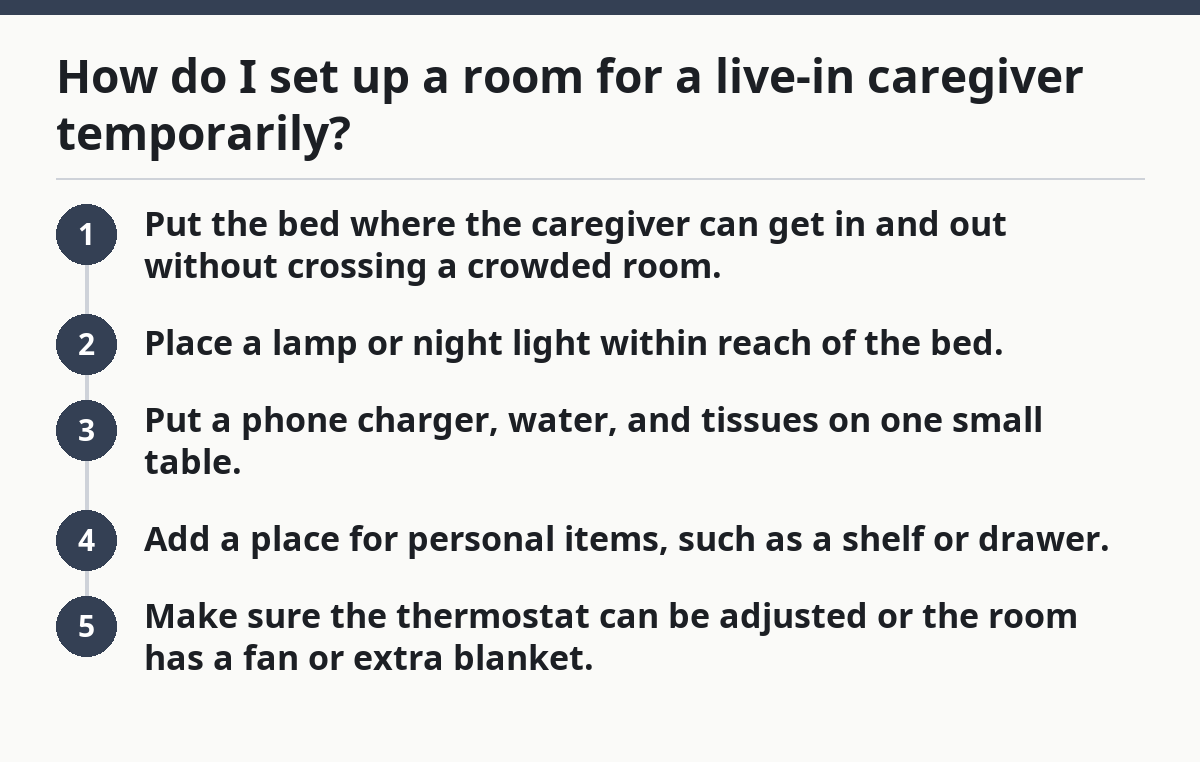
How do I set up a room for a live-in caregiver temporarily?
You set it up like a small bedroom, not like a storage room. That means clearing enough space for a bed, one path to the door, and one path to the bathroom, then adding the few items that matter after dark.
Picture this: you’re turning a spare room into a short-term sleep space for someone who may stay a week or a month. You need the room to work on night one and still feel usable on day ten. Small changes beat a full remodel.
Start by removing clutter from the floor and from the route between bed, door, and bathroom. A path should stay open even when shoes, a laundry basket, or a walker are in the house. If you have to choose, keep the walking path wider and push storage to the corners.
Then build the sleep zone:
- Put the bed where the caregiver can get in and out without crossing a crowded room.
- Place a lamp or night light within reach of the bed.
- Put a phone charger, water, and tissues on one small table.
- Add a place for personal items, such as a shelf or drawer.
- Make sure the thermostat can be adjusted or the room has a fan or extra blanket.
A room that is too cold, too hot, or too bright is a poor sleep room. A simple fan, blackout curtain, or extra blanket can matter more than a new mattress. The room should also have working smoke and carbon monoxide alarms nearby, as your local code requires.
One common mistake is using the room for overflow storage. That can cost space, create trip hazards, and make it feel temporary. Move boxed items elsewhere for the stay. If the room is already small, reduce furniture rather than cramming around it.
For general home caregiving safety, this page supports the main home caregiving safety hub without repeating that advice here.
Make the sleeping space private and usable

The sleeping space should feel private enough for rest and simple enough to enter at night without disturbing anyone else. A caregiver who sleeps lightly, wakes often, or takes calls after hours needs that room to work like a real bedroom.
Picture this: you’re trying to fall asleep while the hall light cuts under the door and every sound from the kitchen carries straight through. That is not a minor annoyance. It can turn a short shift into a long, tired one.
Privacy starts with the door and the sound around it. A solid door helps more than a thin curtain. If the door is hollow, a door sweep and weatherstripping can reduce noise and light spill without major work. A white-noise machine or small fan can also soften house sounds. A lot of homes already have one in a box.
Keep the sleeping space free of visual clutter. Put extra linens in a closet or bin, not on a chair beside the bed. Leave the top of the dresser open for a clock, glasses, and medication if needed. If the caregiver uses a CPAP or another sleep aid device, leave enough room and a nearby outlet so cords do not cross the floor.
Privacy also means knowing when not to enter. If the caregiver is sleeping and there is no urgent need, knock once and wait. A note on the door can help family members remember that this room is occupied and should be treated like a bedroom, not a spare corner. If that arrangement could create family conflict, consider consulting a professional about the best approach.
A few items can help the room feel more usable:
- Blackout curtain or room-darkening shade
- Lamp with an easy switch
- Fan or white-noise device
- Small trash can
- Laundry basket or bag
- Outlet near the bed
Most of this costs little if you already own the pieces. The hard part is deciding that the caregiver deserves the same respect as anyone else sleeping in the home. They do.
What should be within arm’s reach at night?
The caregiver should be able to reach a light, a phone, water, and a call method without getting out of bed in the dark. That is the core night setup, and it matters more than décor.
Picture this: you’re half asleep and hear movement from the other room. You do not want to fumble for a charger, cross the hall barefoot, or search for a number on a refrigerator note. The night setup should cut that panic down to seconds.
Use a simple bedside layout:
- Phone and charger
- Flashlight or night light
- Water bottle
- Reading glasses if needed
- Tissue box
- Emergency contact sheet
- Any written care instructions that may be needed overnight
A bedside table should sit close enough that the caregiver does not have to lean hard or twist while half awake. If the room has only one outlet, use a surge-protected power strip with a cord that does not run across a walkway. If cords must cross the room, move the furniture. Cords on the floor are a trip risk. The National Institute on Aging advises reducing fall hazards by keeping floors clear and lighting walkways.
The emergency contact sheet should be printed, not buried in a phone. Include names, phone numbers, the preferred doctor or agency contact if one is part of the arrangement, and the number to call for urgent help. Put it where it can be seen in low light, such as taped inside a drawer or on the bedside table.
A bed alarm, if one is part of the care plan, needs a place where the caregiver can hear it from the sleeping room. The caregiver should also know what the alarm means before the first night starts. A working alarm that nobody understands is just noise.
Do not hide the important items for neatness. That creates a tidy room that is hard to use at 3 a.m. Function comes first.
How do I make bathroom access safer at night?
Bathroom access should be direct, bright enough to see, and free of loose rugs or dark corners. If the caregiver has to pass furniture, step over cords, or guess where the light switch is, the route needs work.
Picture this: you’re sleepy, one hand on the wall, trying to avoid waking the whole house while you walk to the bathroom. A short trip becomes risky if the hall is dark or cluttered. The fix is plain and practical.
Start with lighting. A plugged-in night light in the hall and bathroom is usually better than a bright overhead light that jolts everyone awake. Put the night light low enough to guide the floor line, not glare into the eyes. If the bathroom is far from the bedroom, add another light between rooms. The American National Standards Institute is one of the bodies that helps guide equipment and lighting standards.
Then clear the route:
- Remove throw rugs that slide
- Tape down cords
- Keep shoes and bags out of the hall
- Leave the bathroom door partly open if privacy allows
- Make sure the path is dry and easy to see
If the home has stairs, the caregiver should not have to use them at night unless that is part of the setup and they are safe to use. A stairway needs good lighting on both ends and a handrail that feels solid. If the bathroom is downstairs and the sleeping space is upstairs, think hard about whether that arrangement is practical.
A handheld flashlight can help during outages, but it should not be the only light source. A battery backup night light or a plug-in model with a built-in glow is more reliable.
One mistake I see often is adding light in the wrong place. A bright lamp in the bedroom does little if the hallway stays dark. Light the route, not just the room.
Write the emergency instructions before the first night
Emergency instructions should be printed, short, and placed where a tired person can find them in seconds. The caregiver should not have to guess who to call, where supplies are, or what to do first if the home has an urgent problem.
Picture this: you’re waking to a fall, a power outage, or a sudden change in the care receiver’s condition. In that moment, memory is unreliable. Paper wins.
Use one emergency contact sheet and keep it in two places if possible. It should include:
- Full names and phone numbers for family or backup contacts
- Primary doctor or clinician contact if relevant
- Local emergency number
- Address of the home written clearly
- Any door code, gate code, or lockbox code
- Location of keys, flashlight, and spare batteries
- The care receiver’s basic overnight routine, if it matters
Keep the sheet short enough to read in under a minute. A page and a half is fine. A binder full of notes is not. If there are special instructions for medication timing, seizure response, oxygen equipment, or a bed alarm, put those in plain language and use the same words the family uses at handoff.
The caregiver should also know where the main power shutoff, water shutoff, and first aid kit are located. Not every home needs those items marked with bright labels, but the location should be known before the first night. A taped note inside a kitchen cabinet can be enough.
This is also where you should check the phone signal in the room. If the bedroom has poor reception, keep a landline or a charged backup phone in another room and write that down. Dead spots create delays. The National Institute on Aging also recommends planning for emergency access and clear routes.
What mistakes make an overnight setup less safe?
The biggest mistakes are clutter, weak lighting, and unclear instructions. They seem small during the day and become a problem at 2 a.m. when a caregiver is tired and half-awake.
Picture this: you’re trying to do the right thing, but the bed blocks the door swing, the night light points at the wall, and nobody wrote down the backup number. That is how a decent setup turns messy fast.
Common errors and what they cost:
- Using a couch instead of a bed: poor sleep, sore back, slower response at night.
- Leaving cords across walkways: trip risk in low light.
- Depending on one phone app for contacts: no access if the phone dies or locks.
- Bright overhead lighting only: harsh wake-ups and worse sleep.
- No privacy plan: the caregiver feels on call all night, even during rest time.
The fix is usually simple. Move the furniture, add a light, print the sheet, and clear the floor. That often does more than buying new gear.
A second mistake is treating the caregiver’s room like a temporary afterthought because the stay is “only a few nights.” Short stays still create night risk. A three-night stay with poor lighting can be more draining than a longer stay in a prepared room. If the plan is unclear, consult a professional about the setup before the first night.
Another mistake is forgetting the bathroom. People focus on the bed and miss the route to the toilet. That route matters because it is one of the most common night trips in the house.
A simple setup checklist you can finish in one afternoon
You can make the overnight caregiving setup safer in one afternoon if you work in order and stop when the basics are done. The list below covers the highest-value changes first.
Picture this: you’re standing in the guest room with a trash bag, a lamp, and a printed contact sheet. You do not need a renovation plan. You need a sequence.
Use this order:
- Clear the floor and hall path of boxes, shoes, cords, and loose rugs.
- Place the bed or sofa so entry and exit are easy.
- Add a lamp or night light within arm’s reach of the bed.
- Put a charger, water, tissues, and a flashlight beside the sleeping spot.
- Print the emergency contact sheet and keep it near the bed.
- Check the bathroom route with the lights off.
- Test the door, hallway light, and phone signal.
- Show the caregiver the room, the bathroom route, and the contact sheet before bedtime.
If you do only three things, do these: clear the path, add the light, and print the contacts. Those three changes handle the most common night problems without turning the house upside down.
The best setups feel calm because nothing has to be figured out at midnight. That is the standard to aim for.
What does an overnight caregiver need at home?
An overnight caregiver needs a real sleep space, a clear path to the bathroom, low light, and written emergency information. A guest room with a bed, a night light, and a bedside phone charger helps meet those needs.
Drafted with AI; not yet reviewed by a person.