Last updated: November 19, 2026
Key Takeaways
- A caregiving contingency binder helps a backup person step in safely and quickly.
- For short-notice replacement care, it should hold only the pages needed in the first hour.
- Turn the binder into a step-by-step handoff, not a pile of loose notes.
- The one-page instructions sheet should be readable within 30 seconds.
A caregiving contingency binder for short-notice replacements gives a backup person the exact facts they need when you have 10 minutes, not 10 hours. Put the daily routine, medication schedule, house key access, mobility notes, and one-page instructions in it. This guide shows how to build a caregiving contingency binder for short-notice replacements so a backup caregiver can step in without guessing.
What this binder has to do on a bad day

A caregiving contingency binder has one job: let a backup person take over safely and quickly. If a home health aide, neighbor, sibling, or friend has to step in with little notice, the binder should answer the first 5 questions without a phone call.
Picture this: you are leaving for an appointment, and the person who usually helps is late or sick. You need the replacement to find the pillbox, know the 8 a.m. routine, and get into the house without hunting for keys. That is the whole point. A good binder cuts panic, not paperwork.
Before you build pages, decide what this binder is not. It is not the long record of bills, insurance, and receipts. It is also not the doctor packet or the full family care file. This binder is the fast-start version for someone stepping in cold.
A simple setup usually works better than a thick one. Use 1 binder, a few divider tabs, and a front sheet that tells the substitute where to start. If the binder takes 20 minutes to understand, it is too slow.
Use this source as a planning model for caregiver crisis prep, then keep this binder focused on the replacement role: the family care plan should live elsewhere, and this page only handles the short-notice handoff. For broader family planning, see the caregiver information checklist from the National Institute on Aging: caregiver information checklist.
- Keep it to the first day of care, not the whole year.
- Put the most used pages in front.
- Make every page easy to scan in under 60 seconds.
What goes in a caregiving contingency binder for a backup person?
A caregiving contingency binder for a backup person should hold the few pages that let someone act within the first hour. Start with one cover sheet, then build out the daily routine snapshot, medication schedule, mobility notes, food and fluid preferences, and security and access notes.
Picture this: you hand the binder to someone who has never done the job before. They should not have to read 30 pages to learn when breakfast happens or which door key works. If they have to guess, the binder is too thin in the wrong places.
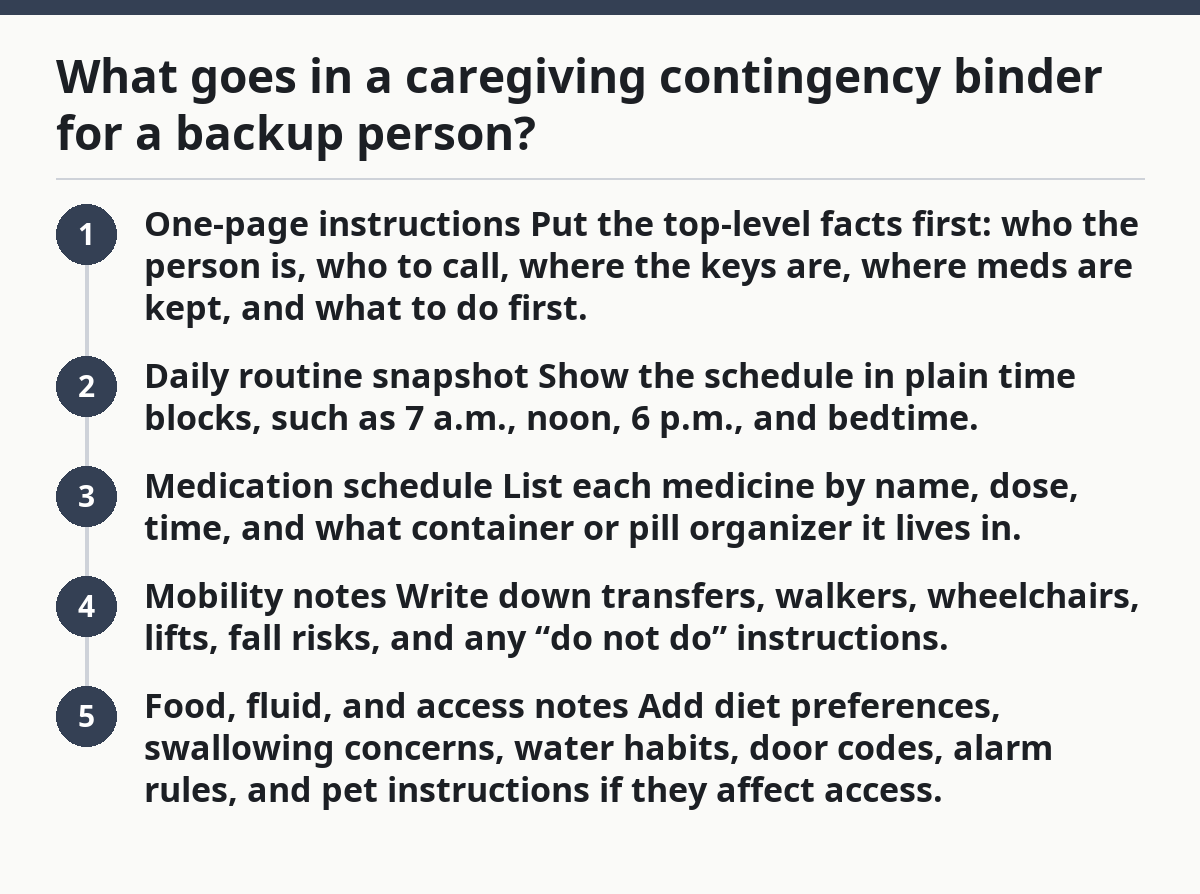
Use 5 core sections:
-
One-page instructions
Put the top-level facts first: who the person is, who to call, where the keys are, where meds are kept, and what to do first. -
Daily routine snapshot
Show the schedule in plain time blocks, such as 7 a.m., noon, 6 p.m., and bedtime. -
Medication schedule
List each medicine by name, dose, time, and what container or pill organizer it lives in. -
Mobility notes
Write down transfers, walkers, wheelchairs, lifts, fall risks, and any “do not do” instructions. -
Food, fluid, and access notes
Add diet preferences, swallowing concerns, water habits, door codes, alarm rules, and pet instructions if they affect access.
A lot of people leave out the “small” stuff. That is a mistake. The substitute does not need your whole history, but they do need the exact mug, the usual snack, and the fact that the back door sticks.
How do I make care easy to follow for a substitute caregiver?
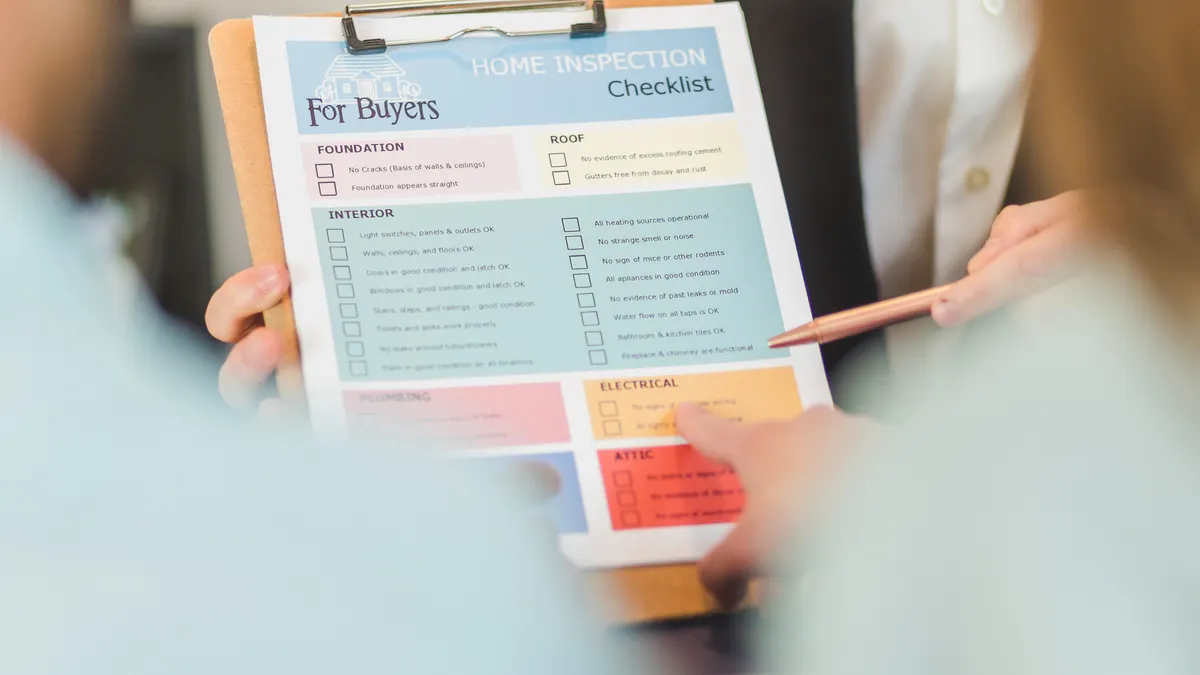
You make care easy to follow for a substitute caregiver by turning the binder into a step-by-step handoff, not a stack of loose notes. Keep the language plain, use the same labels on every page, and put time-based tasks in the same order they happen.
Picture this: the replacement arrives at 6:45 a.m. and wants to know what happens before 8. They should be able to open the binder, read one page, and start. No scavenger hunt.
Follow this order:
-
Write the first 3 actions
Example: “Wash hands, check the calendar on the fridge, give water with breakfast.” The first actions matter most because they anchor the shift. -
List the routine by time
Use the exact times the person actually follows, even if the schedule is messy. If lunch is usually around noon, write noon. -
Put exceptions in bold
If the person refuses a certain food, gets dizzy when standing, or needs a cane after naps, flag it in bold on the page where it belongs. -
Use one page per topic
One sheet for meds, one for access, one for mobility, one for meals. A dense page slows a stressed reader down. -
Write what not to do
“Do not open the side gate,” “Do not crush tablets,” or “Do not leave the front door opened.” Negative instructions are often the ones that prevent mistakes. -
Test the page order
Hand the binder to another adult for 5 minutes and ask what they would do first. If they cannot answer, the front section is in the wrong place.
A plain binder also helps when the substitute is not a family member. A home health aide may know care work, but not your house or your person’s habits. The same format makes both kinds of replacement faster. For a practical home-care standard, see the Family Caregiver Alliance’s caregiving basics: caregiver guide to understanding home care, and compare it with your own setup.
The one-page instructions sheet comes first
The one-page instructions sheet is the page a replacement should see in 30 seconds. It should sit in the front pocket or the first tab, and it should answer the “what now?” question without making the reader flip pages.
Picture this: someone opens the binder while you are already gone. They need the house key access, the emergency contact, and the first task, all on one page. That page is the anchor.
Include these items:
- Person’s full name, preferred name, and room location
- Primary caregiver name and phone number
- Backup caregiver name and phone number
- Doctor or nurse contact if you already have it in your care notes
- Where the keys, lockbox, or keypad code are kept
- The first thing to do on arrival
- The first thing to check before leaving
- A short note on any urgent safety issue, such as wandering risk or a fall history
Keep the wording direct. “Let the dog out first” is better than “Animal care may be required upon arrival.” The second version wastes time.
A clean first page also reduces mistakes when the binder changes hands during a crisis. If the whole binder is well organized but the first sheet is vague, the replacement will still be slowed down.
One-page instructions checklist
- Keep it to 1 page.
- Put the most urgent items near the top.
- Use plain words, not care jargon.
- Update it whenever access codes, phone numbers, or key locations change.
Build the daily routine snapshot and medication schedule
The daily routine snapshot and medication schedule should make the day feel predictable in 10 minutes or less. A replacement should be able to see what happens at breakfast, mid-day, and bedtime without reading a narrative.
Picture this: it is Saturday morning, and the regular caregiver is unreachable. The substitute needs the flow of the day, not a story about how the routine used to work. Timing beats detail here.
Use a simple grid or bullet list for the routine:
- Morning: wake time, wash-up, dressing, breakfast, first medication pass
- Midday: snacks, toileting, rest, exercise, second medication pass
- Evening: dinner, skin care, TV, bedtime preparation
- Overnight: what to do if the person wakes, wanders, or needs the bathroom
For the medication schedule, include each medicine’s exact name, strength, and timing if you know it. If a pill goes in a weekly organizer, say which slot. If it must be taken with food, say that too. The replacement should not have to infer anything from color or shape.
A useful schedule page often includes:
- Medication name
- Dose
- Time
- With food or without food
- Storage location
- Special caution, such as “do not split” or “keep refrigerated”
If you know there is a blister pack, label that. If the regimen changes often, write the last updated date at the top so the substitute knows which page is current. For medication safety and labeling basics, see the U.S. Food and Drug Administration’s guide: medication labels and knowing your medicines.
One honest limitation: this binder should not be the only place meds are tracked when there are frequent changes. A messy or outdated medication page can cause harm, so the page must be checked against the current list before anyone relies on it.
Add mobility notes, food preferences, and access details
Mobility notes, food preferences, and access details belong in the binder because they are the things a new helper gets wrong first. These notes keep the person comfortable and reduce avoidable trouble in the first hour.
Picture this: a substitute is trying to help someone stand from a chair, serve lunch, and open a side door. Small differences matter. A wrong move costs time.
Mobility notes should cover:
- Can the person stand unassisted?
- Is a walker, cane, wheelchair, or lift used?
- Is there a fall risk after lying down or after meals?
- Are there transfer rules, such as “use gait belt” or “no pulling on arms”?
- Are stairs off-limits?
Food and fluid preferences should include:
- Safe foods and “no thanks” foods
- Texture needs, if any
- Usual drink preferences
- Hydration reminders
- Meal timing that keeps the day calm
Access and security notes should include:
- Where the house key is kept
- Lockbox or keypad instructions
- Alarm steps, if the person uses one
- Which doors should stay locked
- Pet instructions that affect entry or exit
Be specific about the house, not just the person. “Front door sticks in cold weather” is useful. “House can be tricky” is not. If the replacement is likely to arrive after dark, say which outside light switch works and where the spare flashlight is stored.
This is also where the binder earns its keep for a backup caregiver who has not been in the home before. The more ordinary the page sounds, the faster it helps.
What are the most common binder mistakes?
The most common binder mistakes are putting too much in it, putting the wrong thing in front, and letting it go stale after one change. Each one costs time, and time is what a short-notice replacement does not have.
Picture this: the binder exists, but the key page is buried behind bank forms, old notes, and a five-year medication list. The substitute opens it and still cannot start. That is not a binder. That is delay in a cover.
Common mistakes and what to do instead:
-
Too many pages
Cost: the replacement stops reading.
Do instead: cut the binder down to the first-day essentials. -
No page order
Cost: the reader has to hunt for the basics.
Do instead: front-load the one-page instructions and daily routine. -
Old medication info
Cost: the page can mislead someone during a time-sensitive task.
Do instead: date the med page and review it whenever the regimen changes. -
Vague directions
Cost: the replacement guesses, and guesses waste time.
Do instead: use exact times, exact locations, and exact names. -
No access plan
Cost: the helper cannot get in the house or to the supplies.
Do instead: write down the key, lockbox, or code access process in plain terms.
A binder for short-notice care should be easy to skim in 2 minutes and useful in the first 15 minutes. If it takes longer than that, trim it.
Keep the binder current so it still works in a real emergency
Keep the binder current by setting a review date and updating it after any real change. The best caregiving contingency binder fails if the key changed, the pill list changed, or the daily routine shifted and nobody wrote it down.
Picture this: three months pass, the routine changes, and the binder still shows the old breakfast time. A substitute follows the wrong page and misses the morning flow. Outdated is unsafe.
Use a short update routine:
- Review the binder on a set schedule, such as the first day of each month.
- Check access notes, emergency contacts, and medication pages after any change.
- Replace handwritten pages that are hard to read or marked up too much.
- Keep one current copy in the home and one known backup location, if that fits your setup.
- Tell the regular helpers where the binder lives so no one has to search for it.
A small date stamp on each major page helps. It tells the replacement which page is current without making them compare versions. If the binder is digital as well as paper, the paper copy still needs to match the current version.
The truth is, a contingency binder is only useful if someone can trust it on a messy day. Keep it short, clear, and current, and it can save the first hour when the regular plan falls apart.
For a wider planning system, this binder fits best inside a larger caregiver crisis planning folder. The folder handles the bigger picture; this binder handles the handoff. For emergency-preparedness basics that support this kind of planning, see Ready.gov: access and functional needs guidance.
What goes in a caregiving binder for a backup person?
A caregiving binder for a backup person should include a one-page instructions sheet, a daily routine snapshot, a medication schedule, mobility notes, food and fluid preferences, and security and access notes. Those pages help a substitute start fast and avoid the first mistakes.
Skip legal, billing, and long-term record sections here. Those belong in a different file, because this binder is for short-notice care, not administration.
How do I make care easy to follow for a substitute caregiver?
Make care easy to follow by putting the most urgent tasks first, using plain labels, and keeping each page focused on one job. A substitute should be able to find the first action in under a minute and the rest of the day in a few quick flips.
Use exact times, exact locations, and short warnings for anything that can go wrong.
Drafted with AI; not yet reviewed by a person.