
Caregiver Coordination And Daily Routines — The Complete Guide

Last updated: November 20, 2026
Caregiver Coordination and Daily Routines: A Complete Guide
Quick Answer: For most households, a one-page caregiver coordination routine with 24-hour time blocks is enough to reduce missed handoffs and make daily care easier to follow.
Caregiver coordination and daily routines — The Complete Guide works best when one person owns the master routine, every task has a clear time, and the whole household uses the same system every day. If the routine keeps slipping, the fix is usually not “more effort” — it is fewer handoffs, fewer mixed messages, and a simpler plan for mornings, meals, toileting, bathing, and bedtime.
Key takeaways

- A good caregiving routine is written down, shared, and short enough to follow on a tired day.
- The right system is the one that makes bathroom trips, transfers, medication times, and meals predictable enough to follow without guessing.
- A paper schedule wins when several people need a fast, visible plan on the wall or fridge.
- A shared digital calendar wins when caregivers live in different places or changes happen often.
- The routine needs a backup plan for missed shifts, urgent bathroom needs, and days when energy is lower than usual.

What does caregiver coordination mean?
Caregiver coordination means one clear plan for who does what, when they do it, and what happens if the day goes off script. It covers the ordinary parts of care that cause the most confusion: getting out of bed, walking to the bathroom, showering, meals, medicine, rest, and nighttime check-ins.
That sounds simple, but most families fail at the handoffs. One person assumes someone else already helped with the toilet, another assumes the morning medicine was given, and the day starts with a gap. The fix is a routine that names the task, the time, and the person responsible.
The National Institute on Aging has a solid caregiving overview here: NIA caregiving resources.
A bathroom-heavy routine needs extra clarity because those tasks are time-sensitive and safety-sensitive. A missed transfer, a slippery floor, or a rushed shower can turn into a fall, and the CDC’s falls resources are worth keeping handy: CDC falls prevention.
Because caregiver coordination and daily routines shape the whole day, the goal is not a perfect household. The goal is a system that still works when one caregiver is late, tired, or away for the afternoon. If the routine only works on an unusually easy day, it is too fragile.
Paper schedule or digital calendar?
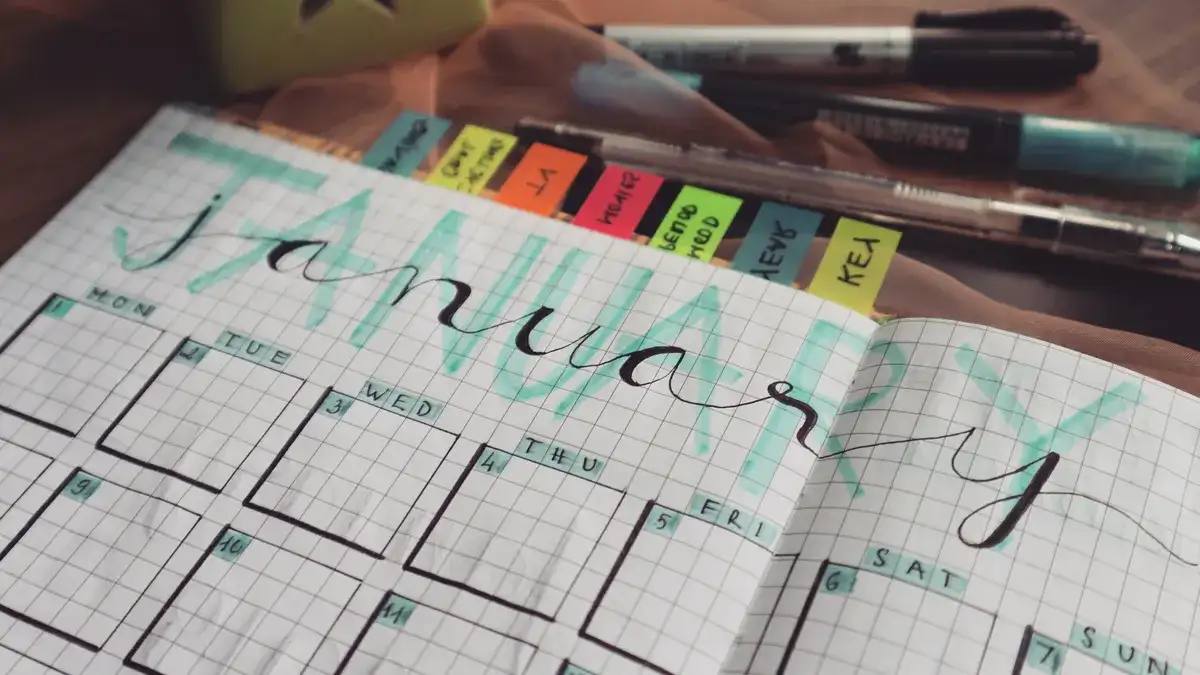
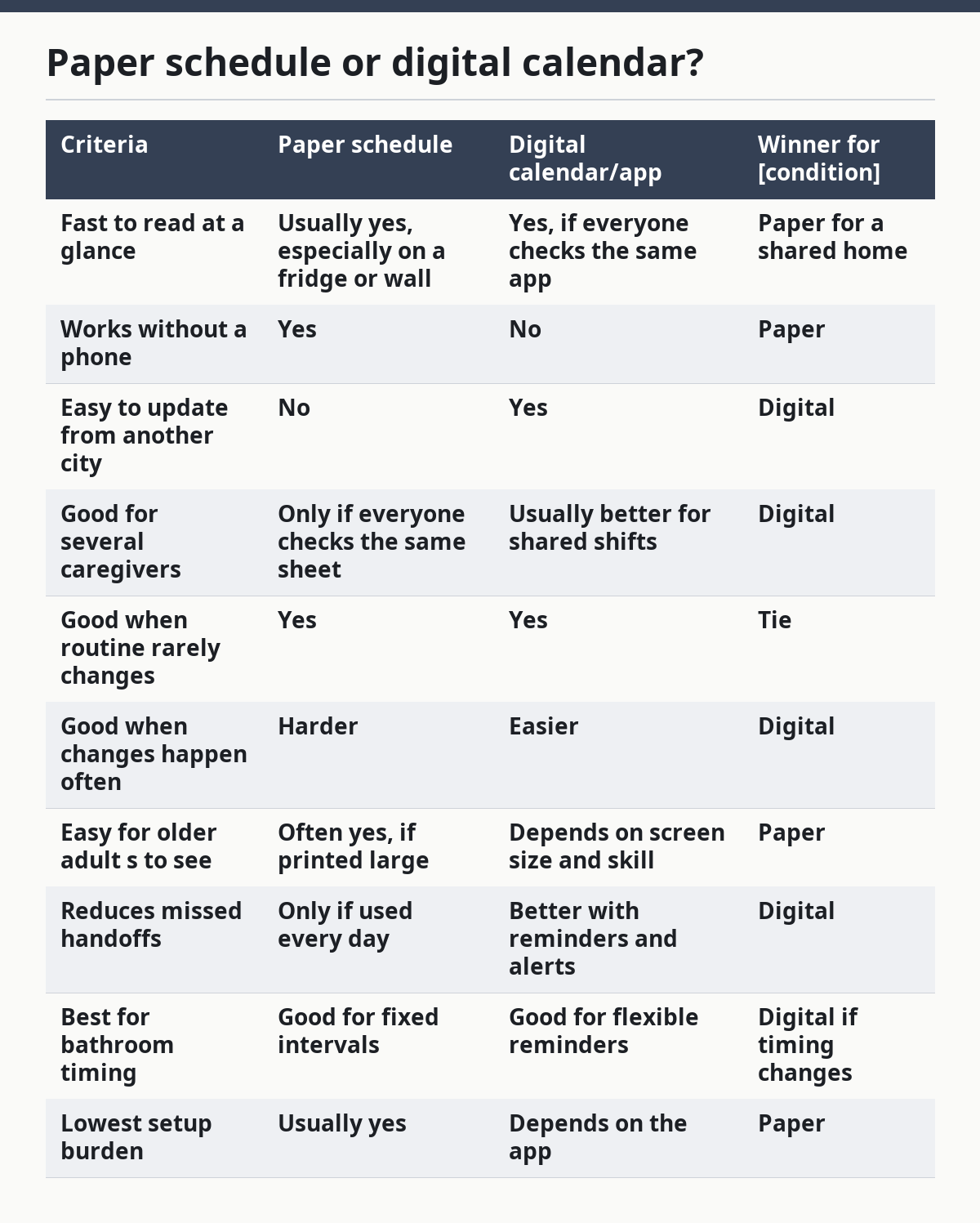
A paper schedule can be simpler, while a digital calendar can be better for remote coordination and fast changes. The right choice depends on how many people help, how often plans shift, and whether the person receiving care can see or use the system.
Here is the real difference:
| Criteria | Paper schedule | Digital calendar/app | Winner for [condition] |
|---|---|---|---|
| Fast to read at a glance | Usually yes, especially on a fridge or wall | Yes, if everyone checks the same app | Paper for a shared home |
| Works without a phone | Yes | No | Paper |
| Easy to update from another city | No | Yes | Digital |
| Good for several caregivers | Only if everyone checks the same sheet | Usually better for shared shifts | Digital |
| Good when routine rarely changes | Yes | Yes | Tie |
| Good when changes happen often | Harder | Easier | Digital |
| Easy for older adults to see | Often yes, if printed large | Depends on screen size and skill | Paper |
| Reduces missed handoffs | Only if used every day | Better with reminders and alerts | Digital |
| Best for bathroom timing | Good for fixed intervals | Good for flexible reminders | Digital if timing changes |
| Lowest setup burden | Usually yes | Depends on the app | Paper |
A paper system can work well when the care team is small and the day is repeatable. It can be a whiteboard, a printed sheet, or a clipboard with a 24-hour routine broken into blocks. That kind of setup is especially useful when the same person handles breakfast, lunch, toileting support, and bedtime most days.
The drawback is that paper breaks down when the plan changes at the last minute. If one caregiver swaps a shift, a paper note can get lost in a kitchen drawer or ignored on the counter. It also does not remind anyone. A line written at 7:00 a.m. can still be true at 3:00 p.m., but it does not chase the next person.
Digital tools can work better when there are multiple helpers, long-distance family members, or a lot of moving parts. A shared calendar can carry the same details every day: morning routine, shower day, meal prep, transport, and evening check-in.
The downside is friction. If one person dislikes apps, forgets passwords, or misses notifications, the system stops being shared. A paper-first setup is often the safer starting point for a small household, but the best fit depends on who has to use it and how often it changes.
What should a daily routine include?
A useful daily routine includes the same core blocks every day: wake-up, bathroom care, hygiene, meals, medicine, movement, rest, and bedtime. It should also show who handles each block and what “done” means for that task.
Start with the morning. Write down the first hour in plain language: wake up, bathroom, wash face, change clothes, eat breakfast, take morning medicine if prescribed, and check the day’s plan. If transfers are involved, the routine should say exactly how much help is needed. “Walk to bathroom with one-person assist” is clearer than “help with bathroom.”
The bathroom block deserves special detail. If the person needs support with toileting, showering, or getting on and off the toilet, the routine should include the time, the safety setup, and the backup step if the bathroom is occupied. A locked door, a wet floor, or a missing grab bar can turn a small delay into a hazard. The routine should be boring enough that no one has to guess.
Meals matter because hunger and dehydration change behavior fast. A steady meal schedule can reduce agitation, weakness, and the scramble that happens when someone gets too tired to eat well. The same idea applies to medication timing if a prescriber has set specific times. The routine should never replace medical instructions, and any medication plan should follow the prescribing clinician or pharmacist.
Afternoon and evening blocks need less detail than the morning, but they still need names and times. Many households forget rest periods, yet rest is part of the plan. A short nap, a chair break, or 20 minutes off the feet can make the rest of the day possible.
Bedtime should be fixed enough to reduce last-minute rushing, especially if the person needs help with toileting before sleep.
For a more detailed planning tool, see our medication management page.
How do you keep bathroom care safe?
Bathroom care stays safer when the routine removes hurry, clutter, and guesswork. The first step is to prevent problems before anyone steps into the room.
First, make the route simple. The path from bed to bathroom should stay clear of shoes, laundry baskets, cords, and low furniture. If the person uses a walker, there needs to be room to turn and stop without scraping the frame into the door.
Second, make transfers predictable. If the person needs help standing, sitting, or pivoting, the routine should name the kind of help every time. “Two-person assist” is not a casual phrase; it means one caregiver may not be enough. The routine should never ask a single caregiver to improvise when the person is unsteady.
Third, reduce slip risk. Wet floors, loose mats, and poor lighting are common problems. The CDC’s home fall-prevention guidance is useful here because it focuses on simple changes that lower risk without turning the bathroom into a construction zone. Even a basic routine of wiping the floor after showers and keeping a dry towel within reach can matter.
Fourth, plan for urgency. A bathroom schedule must allow for “I need to go now” moments. If the person has a hard time waiting, the routine should include a fast-response backup. That might be a bell, a phone call, or a second caregiver on certain hours.
A good plan respects dignity by reducing the chance of an accident.
What does a good handoff look like?
A good handoff says what happened, what changed, and what needs attention next. It is short, specific, and repeatable.
A bad handoff sounds like, “Everything’s fine.” That phrase hides too much. Was breakfast eaten? Was the bathroom trip safe? Did the person refuse a shower? Did morning medicine happen before food or after? If the next caregiver has to guess, the handoff failed.
A good handoff can fit on a note card or in a text. It should include at least four facts: the time, the task completed, anything unusual, and the next task due. For example: “10:15 a.m., toileting done, left knee sore, lunch due at noon.” That is enough for the next person to act.
It also helps to use the same words every time. If one caregiver writes “toilet assist” and another writes “bathroom help,” that may be fine. But if one means “standby only” and the other means “full physical assist,” the routine is no longer precise.
Keep the language plain and fixed, especially if several people rotate through the same role.
What are the most common coordination mistakes?
The most common mistake is building a plan that depends on memory. A memory-based system works for one calm day, then falls apart the moment someone is late or distracted.
The second mistake is making the routine too long. A four-page care plan may look thorough, but it is useless if no one reads it by 7:30 a.m. The better plan is short enough to live on a clipboard, fridge, or shared screen, with the most important tasks on the first page or the top screen.
The third mistake is leaving out bathroom timing. Families often document meals and medicine but forget toileting, shower day, and nighttime trips. That gap matters because bathroom care is one of the first places where falls, embarrassment, and rushed decisions show up.
The fourth mistake is assuming one caregiver can absorb every extra task. That is how burnout starts. If one person handles all the mornings, all the meals, and all the bathroom support, the routine may look stable while quietly wearing that person down. A good schedule protects the caregiver as much as the person receiving care.
The fifth mistake is skipping a backup plan. Sickness, traffic, a flat tire, and a long doctor visit can all break the day. A backup plan names who steps in, what tasks can wait, and which tasks cannot.
For related planning support, see our dementia care tips.
Exception scenarios: when the usual choice flips
A paper routine can beat a digital one when the person receiving care is the main user of the schedule and needs a large, visible reminder. A large-print sheet on the wall is often better than a phone alert that never gets opened.
A digital system can beat paper when three or more caregivers share the load across different homes. In that case, the main risk is not forgetting the plan — it is using different versions of it. A shared calendar reduces that problem because updates happen in one place.
A more detailed routine can be a bad idea when the household is already overwhelmed. If the plan takes 20 minutes to read and no one has that time, the document is too dense. Cut it down to the next 24 hours and the next three non-negotiable tasks.
A highly structured bathroom schedule may also be the wrong fit if the person resists rigid timing and becomes upset by repeated prompts. In that case, the routine may need wider windows rather than fixed minutes.
A clinician or occupational therapist may help if the person has frequent falls, dementia-related confusion, or repeated toileting accidents.
Which routine works best in real life?
A simple, shared routine works well for many families, and a paper-first setup is a practical place to start if the household is small. The reason is plain: the care plan has to be used by tired people on ordinary days, not admired by organized people after the fact.
Paper can work well when the care happens mostly in one home, the number of helpers is small, and the routine does not change much from day to day. Digital can work well when the plan changes often, when family members live elsewhere, or when shift handoffs happen several times a week.
The right choice depends on how often the routine changes and how many people need the same information at the same time.
A good routine is not a list of wishes. It is a tool for action. If the tool does not help with bathroom support, meals, medicine timing, rest, and bedtime, it is not doing its job.
The better choice is the one that makes the next task obvious in under a minute. That is the standard to use when comparing a calendar app, a paper chart, a notebook, or a whiteboard.
If the next caregiver can glance once and know what to do, the system is working.
Choose a paper routine if the care happens in one home, the day is mostly steady, and the person receiving care benefits from a large visible schedule. Choose a digital routine if several caregivers share shifts, plans change often, or updates must reach people who are not in the house.
Neither option works well if the plan is so long, vague, or scattered that nobody uses it twice.
FAQ
How detailed should a caregiver routine be?
A caregiver routine should be detailed enough to remove guesswork, but not so long that people ignore it. For most homes, that means clear time blocks, named tasks, and one line for bathroom care, meals, medication, and bedtime. If a routine needs more than a single page to explain a normal day, it is probably too complex.
What is the best way to share a routine with family members?
The best way is the one everyone will actually check. For a small household, a paper sheet on the fridge may work better than an app. For family members in different places, a shared digital calendar is usually easier because updates reach everyone at once.
How do I handle bathroom support without making the person feel rushed?
The answer is to build extra time into the routine and use the same words every day. Say what is happening before it happens, keep the path clear, and avoid last-minute changes when possible. If bathroom trips often become stressful, a clinician or occupational therapist may help review the setup.
What if the routine keeps breaking down?
The answer is to cut the routine until only the essential parts remain. Keep the first 24 hours visible, name one person for each major task, and add a backup plan for missed shifts. If the person has repeated falls, confusion, or mobility trouble, a professional review may help refine the care plan.
Should I use paper and digital tools together?
The answer is yes, but only if one is clearly the master and the other is a backup. A hybrid setup works when paper stays visible in the home and the digital version keeps distant caregivers informed. Two equal systems usually cause duplicate updates and missed changes, so one format has to lead.
Drafted with AI; not yet reviewed by a person.