
Last updated: November 19, 2026
Key Takeaways
- A caregiving transition plan gives the next person day-one instructions, not just the usual routine.
- Include daily care, medicines, doctor contacts, and who covers first.
- One afternoon is enough to draft a workable plan if you gather facts first.
- Keep the first day narrow, with shifts and only the tasks that matter.
A caregiving transition plan for sudden illness, hospitalization, or travel keeps care going when a family caregiver is suddenly out of the picture. Build a caregiving transition plan now with a backup caregiver, a medication list, and an emergency contact sheet. The steps below show what to put in it, who should have it, and how to use it without scrambling.
What a caregiving transition plan does
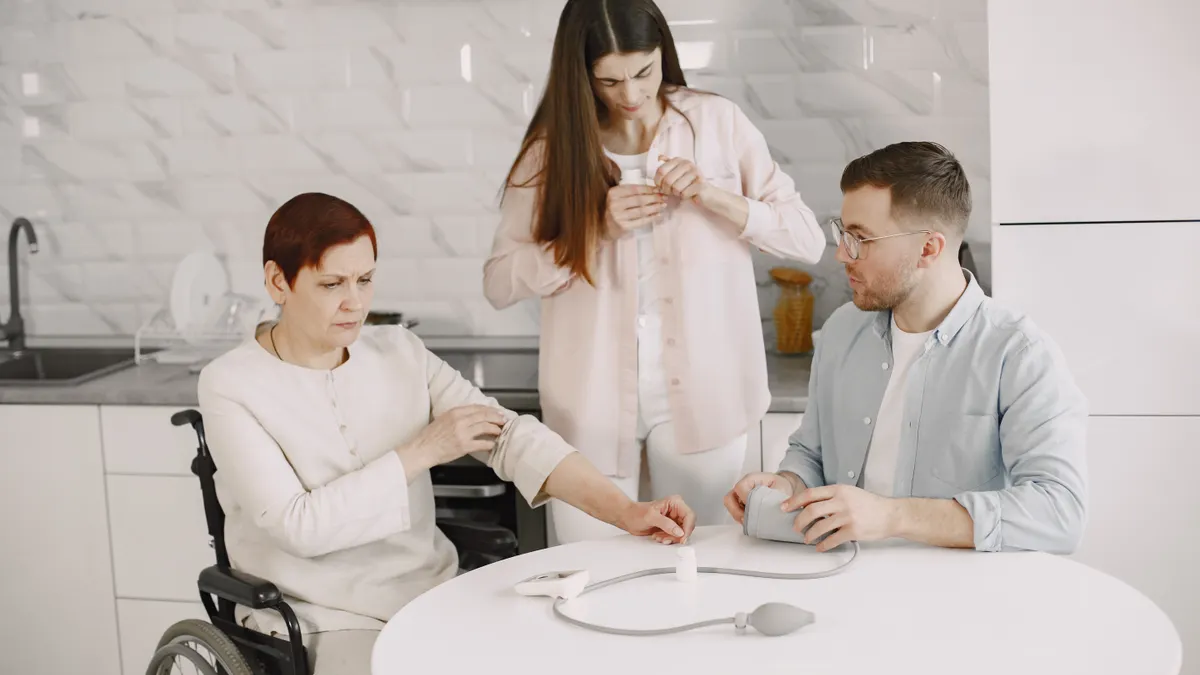
A caregiving transition plan tells the next person exactly what to do on day one, not just what the routine looks like in a calm week. It covers temporary coverage, who handles meds, who calls the primary care physician, and how to restart the normal schedule after a few days or a week.
Because illness and travel can disrupt routines fast, the plan should be short, clear, and ready before it is needed. Picture this: you get a call at 7 p.m. and the usual caregiver is in the ER, or a flight leaves in 10 hours. You do not need a perfect system. You need a short, clear plan that works with the people and papers already in the house.
Use a one-page core plan plus a few attached sheets. The core page should fit on a clipboard or in a digital note. Anything longer becomes a search problem, and search is the last thing you want at 2 a.m.
- Put the main names, numbers, and routines in one place.
- Add one backup person for nights and one for daytime.
- Keep a paper copy where the medication box lives.
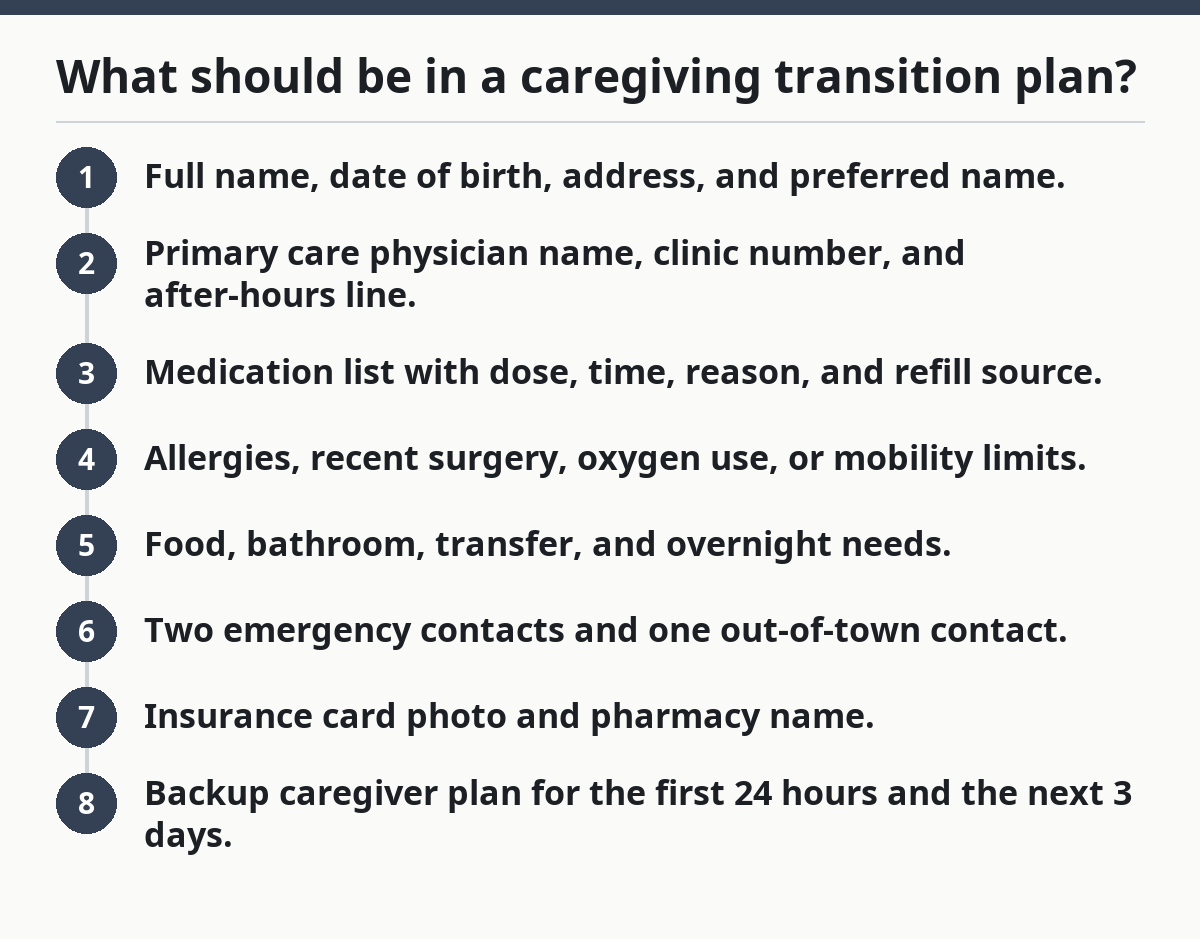
What should be in a caregiving transition plan?
A caregiving transition plan should include the person’s daily needs, medicine details, doctor contacts, and the order of who covers what first. It also needs the name of the backup caregiver and a simple return-to-routine note.
Here’s the catch: the plan is not just a contact list. It is a handoff tool. A generic phonebook misses the parts that trip people up, like a 9 p.m. pill, a walker stored in the hallway, or a food texture that the person won’t swallow.
Start with these pieces on one sheet and one folder. Keep the wording plain. No family shorthand.
- Full name, date of birth, address, and preferred name.
- Primary care physician name, clinic number, and after-hours line.
- Medication list with dose, time, reason, and refill source.
- Allergies, recent surgery, oxygen use, or mobility limits.
- Food, bathroom, transfer, and overnight needs.
- Two emergency contacts and one out-of-town contact.
- Insurance card photo and pharmacy name.
- Backup caregiver plan for the first 24 hours and the next 3 days.
The emergency contact sheet belongs with this packet, and it should be part of the packet rather than the whole plan. Contact numbers help, yet the person taking over also needs to know where the pillbox is, how the house alarm works, and which chair is safest for transfers.
- Keep one copy printed.
- Keep one photo on the phone.
- Update it after any medication change or new diagnosis.
If the plan feels too long, trim explanations before you trim facts. A short, complete plan beats a polished half-plan every time.
How do I make the plan in one afternoon?

You can make a usable caregiving transition plan in one afternoon if you gather the facts first, then write the handoff in plain steps. The fastest workable version is often a 30-minute capture, a 30-minute review, and a 30-minute copy-and-store pass.
Start where the care already happens. The kitchen counter, the bedside table, and the pill organizer often hold the real routine. Do not trust memory alone when the person is tired or upset. Write down the actual sequence, not the ideal one.
- List the daily routine. Write wake-up, meals, medicine times, toileting help, exercise, and bedtime in order. Use clock times, not “morning” or “later.”
- Copy the medicine details. Include name, dose, schedule, prescribing doctor, and where refills come from. If a bottle says “as needed,” note the reason and the usual limit from the label.
- Name the first responder. Choose one backup caregiver for the first 12 to 24 hours and one more for the next shift. If travel is the reason, include the departure and return dates.
- Write the handoff notes. Put “what must not be missed” at the top: insulin, oxygen, wound care, or a 10 p.m. dose.
- Add the doctor list. Include the primary care physician, specialist names, pharmacy number, and after-hours instructions.
- Store the packet in two places. One paper copy stays at home. One goes to the backup caregiver, along with photos of key documents.
The result to expect is simple: another adult can step in without guessing. That does not mean every problem is solved. It means the first 24 hours are controlled enough to prevent avoidable mistakes.
- Use a binder, folder, or envelope marked “care plan.”
- Put the same document in a shared phone note or cloud file.
- Check that someone else can open it without your help.
A plan made in one afternoon will still need edits later. A good first draft is better than no draft and a lot better than five scattered texts.
How to cover care while the primary caregiver is suddenly unavailable
You cover care by dividing the first day into shifts, assigning only the tasks that matter, and keeping the plan narrow enough that a tired person can follow it. The first 24 hours are for safety, not for perfect coverage.
Picture this: the main caregiver is in the hospital, or a delayed flight turns into an overnight stay. The person at home still needs meals, meds, toileting help, and one calm point of contact. The backup plan should say who does each task from hour zero to hour 24.
Use a simple shift chart. Even a basic handoff works better than a group chat with no owner.
- 0–4 hours: confirm safety, meds, food, and bathroom access.
- 4–12 hours: check the next dose, sleep setup, and phone charger.
- 12–24 hours: review the schedule again and note anything that changed.
- After 24 hours: decide whether the backup caregiver needs a second helper.
A short checklist keeps people from stepping on each other. It also keeps them from assuming someone else already handled the hard part.
- Call the person in charge of the home, if that is not the patient.
- Verify the next medicine time from the written list.
- Confirm meals, hydration, and transport needs.
- Check whether the overnight backup is needed.
- Text the primary caregiver, if possible, with one status update.
- Record what changed in a notebook or shared note.
The truth is, a transition plan fails when two people think the other person is handling medicine or meals. Assign names, not roles. “Someone will check” is how doses get missed.
- One task, one owner.
- One update time, such as 8 p.m.
- One place to record changes.
If the person needs skilled wound care, injections, oxygen changes, or transfer help that the backup person cannot do safely, stop and get a trained helper. A family plan is not a substitute for the right level of care.
How do I handle medication access and doctor contact lists?
Medication access and doctor contact lists should be ready before the emergency starts, because they are the first things that fail when someone leaves in a hurry. If the backup person cannot get the right pill at the right time, the whole plan wobbles.
Picture this: the pill bottle is in the main caregiver’s bag, the pharmacy is closed, and the doctor’s office is on lunch break. A good plan reduces that mess to one call and one labeled sheet.
Use a medication list that includes the full drug name, strength, time, reason, and pharmacy phone. Match it to the labels on the bottles, not to memory. If the person uses any prescription medicines, it also helps to keep the list consistent with the bottle directions and the current refill plan. For controlled meds or hard-to-fill prescriptions, note the refill timing and who normally requests it.
The contact list should name the primary care physician, specialists, pharmacist, and at least one family member who can answer history questions. Keep after-hours numbers if the office has them. If the patient has a portal login, store that with the paper packet in a password-safe way that follows the site’s rules.
Use a simple 3-column format.
- Who to call: doctor, pharmacy, backup caregiver.
- Why to call: refill, question, symptom, change in plan.
- What to have ready: date of birth, medication name, last dose, symptoms.
This is where many generic articles go thin. They tell you to “keep important numbers handy” and stop there. That misses the hard part: the backup person may not know which doctor handles which problem. A cardiologist, a primary care physician, and a surgeon do not do the same job. For medication safety basics, see the U.S. Food and Drug Administration’s guidance on medication labels and use, and for home-care planning, the National Institute on Aging offers caregiver guidance.
A good contact sheet also includes a line for “what to do if unreachable.” That may be the clinic nurse line, urgent care, or the on-call system printed on the after-hours sheet. Do not guess at that step on the spot. If you need a general home-care checklist, the CDC caregiver resources can help organize the basics.
For more structure on related crisis planning, the hub on caregiver crisis planning can sit beside this page. It helps keep the broader system organized without turning this plan into a giant binder. A related family caregiving checklist can also help you cross-check tasks.
How do I set up an overnight backup without chaos?
You set up an overnight backup by naming who sleeps, who checks, and what counts as an urgent wake-up. A calm night plan is different from a daytime schedule, and it needs fewer decisions, not more.
The night shift is where people make bad assumptions. One person thinks the other already gave the 10 p.m. pill. Another thinks the bathroom light will be enough. Then the morning starts with a missed dose and a tired patient.
Write the overnight plan in plain language. Include the bed setup, bathroom route, phone volume, monitor or alarm use, and what to do if the person wakes confused. If the patient needs help standing, note whether one person can do it or whether two people are needed.
Use these overnight details.
- Where the phone charger stays.
- Whether the door should stay opened for a night helper.
- What time the last medication is due.
- How to get the person safely to the bathroom.
- If there is pain, a fall, or trouble breathing, who to call and which number to use.
If the backup caregiver is staying elsewhere, tell them exactly when to arrive and where to park or enter. A 10-minute delay at night can become a safety issue if the person cannot get out of bed alone.
The best part of an overnight plan is that it can lower panic, especially for the person taking over at night. Nobody has to invent rules while half asleep. Nobody has to call three relatives to ask what “normal” means.
- Use a written bedtime routine.
- Leave water, glasses, and medicine in one spot.
- Put the emergency sheet where the helper can see it.
This setup is not for every home. If the person needs continuous clinical monitoring, a family backup is not enough on its own. The safer choice is outside help, not a more detailed note. For emergency preparedness basics, the Red Cross preparedness guidance is a useful reference.
How do I bring the routine back after the crisis?
You bring the routine back by reversing the handoff in the same order you used to start it, then checking what changed during the absence. The return-to-routine step is where most transition plans get lazy, and that is where confusion comes back.
Picture this: the caregiver is home from the hospital, or back from travel, and everyone wants to “just get back to normal.” That sounds nice. It also causes missed updates, duplicate medicines, and leftover chores that no one owns.
Use a 15-minute reset checklist.
- Review any new doctor instructions from the last few days.
- Compare the current medicine list with the old one.
- Note missed tasks, supply shortages, or new symptoms.
- Decide who resumes each job on the next 24-hour schedule.
- Store the updated paperwork back in the same place.
This step needs dates. Write when the backup started, when it ended, and what was different at the end. A small note like “started Tuesday, returned Friday, new pill added” can save a lot of guessing later. If the routine changed for more than 48 hours, update the plan copy, not just the memory of the person who handled it.
The common mistake here is assuming the crisis is over as soon as the regular caregiver comes back. It may not be. The person who took over may know about a new symptom, a refill issue, or a new appointment that still needs action.
Keep the final handoff short and exact.
- What changed.
- What stayed the same.
- What needs follow-up.
- Who owns the next call.
That closes the loop without turning the plan into a permanent mess. For a fuller family handoff reference, the care transition checklist can sit alongside this plan.
What should be in a caregiving transition plan?
A caregiving transition plan should include names, numbers, daily care steps, medication details, and the backup person who can step in first. It also needs the primary care physician, pharmacy information, and a short note on overnight care.
The most useful version fits on one core page plus attachments. Add the routine in clock times, not vague words, and include any task that cannot be guessed from sight. If the plan is for travel, write the departure and return dates too.
How do I cover care while a caregiver is in the hospital?
You cover care by assigning the first 24 hours in shifts and keeping the list short. One person handles meds, another handles meals or transport, and a third person gets updates if needed.
A simple written handoff beats group texts because it gives each task an owner. If the home needs skilled care that the backup person cannot do safely, bring in trained help instead of stretching family too thin.
How do I hand off caregiving for a short trip?
You hand off caregiving for a short trip by preparing the plan before the suitcase is packed. Leave the medication list, emergency contact sheet, doctor numbers, and daily routine with the backup caregiver.
The best handoff for travel is the one that removes guesswork before departure. If you want a broader template, the travel caregiver checklist can support the same process.
Drafted with AI; not yet reviewed by a person.